
Thermal Cameras for Drivers Who Cannot Rely on Headlights
A thermal camera sees heat, not light. It finds a person in total darkness, through dust, smoke and light fog, and it is unaffected by the glare that blinds a normal camera at night.
Infrared LED cameras illuminate the scene themselves, which is why they work over a few metres and then fall away. Thermal cameras passively detect emitted heat and work out to hundreds of metres in complete darkness. For a truck on an unlit rural road, a machine working at night in a yard, or a vehicle operating in dust, that difference is the difference between seeing a person and not.
The JPC-256 platform uses an uncooled vanadium-oxide detector with a 256 × 192 array, an 8–14 μm response band and a NETD of ≤ 50 mK, meaning it resolves temperature differences of a twentieth of a degree. Output is AHD, so it plugs into the same monitors and MDVRs as the rest of our range. A window defrost heater activates below 2 °C and switches off above 7 °C, keeping the lens clear in freezing conditions.
Thermal Imaging Cameras — all 7 models
Every model in this range, with its product photograph, features, ordering notes and installation guidance.

JPC-256-AI-A 5-inch thermal imaging night vision system (pedestrian + vehicle + animal detection / touch screen)
Three-in-one AI recognition: simultaneous detection of pedestrians, vehicles, and animals (animals can be recognized up to 60m, and …
View details
JPC-256Ai-mirror special car rearview mirror thermal imaging night vision system (4.3 inches / factory rearview
Rearview mirror-type main unit, installed at the position of the factory harness rearview mirror (special bracket for special vehicl…
View details
JPC-256Ai-7inch 7-inch thermal imaging AI all-in-one machine (display built-in algorithm / 1024×600 IPS)
7-inch all-in-one machine: The display host has a built-in AI algorithm module. The camera + a screen is a complete system, and the …
View details
JPC-256Ai-ALL smart AI thermal imaging camera (camera built-in algorithm / no host / AHD + RS485)
The camera has a built-in AI algorithm and does not have an independent host: it can work just by connecting it to an AHD monitor, m…
View details
JPC-256 vehicle thermal imaging camera (256×192 / without algorithm / AHD output)
Single thermal imaging camera without AI algorithm: the lowest cost, "only visible, no alarm" entry-level solution
View details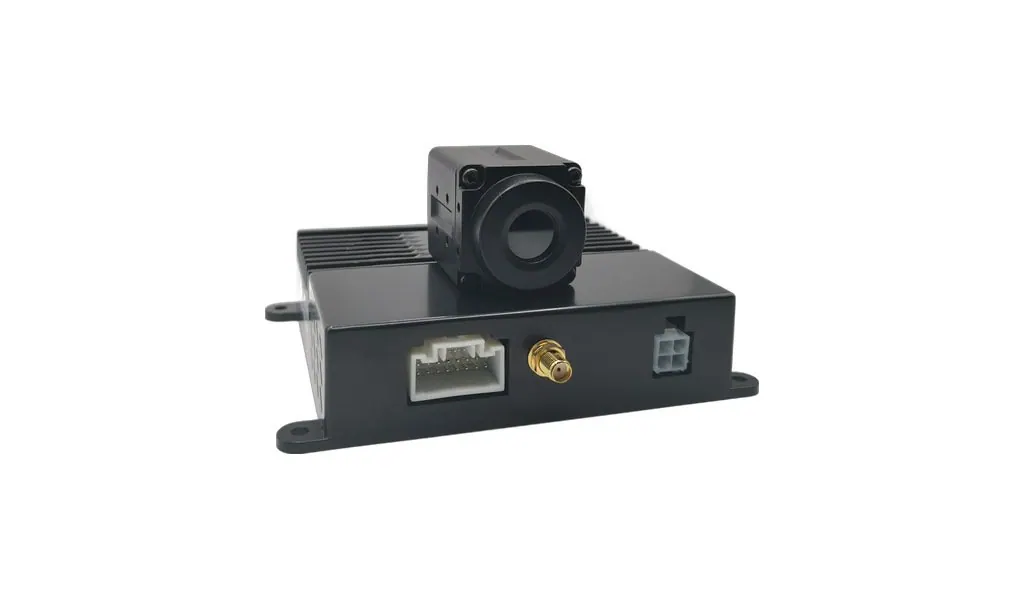
JPC-256Ai Universal Thermal Imaging AI Night Vision System (CVBS + USB Dual Output/With Controller)
Universal DIY modification solution: thermal imaging camera + independent controller (ECU), the algorithm is in the controller, and …
View details
JPC-256Ai-AHD vehicle thermal imaging AI camera (AHD output/720P-1080P optional)
Thermal imaging + AI recognition integrated, video output in AHD digital high definition (720P / 1080P optional)
View detailsReading a thermal specification
- Resolution determines how much detail you can resolve. 256 × 192 is enough to see that a warm shape on the roadside is a person at 85 metres with a 3.6 mm lens. 640 × 512 resolves much finer detail at the same distance, which is what you need for identification rather than mere detection.
- NETD is thermal sensitivity. Lower is better; ≤ 50 mK is a good commercial target. A high NETD camera produces a mushy image in mild weather even though the resolution number looks fine.
- Lens focal length trades field of view against distance. Wide (3.6 mm) suits low-speed manoeuvring and near-field detection; narrow (10 mm) suits highway and long-range work.
- Pixel size tells you about the detector generation. 12 μm is current mainstream; larger pixels generally mean an older, bulkier detector.
- Defrost is not a luxury in a cold climate. A thermal lens ices like any other, and without a heater the camera is blind exactly when it is most needed.
Where thermal genuinely earns its place
- Unlit rural routes where pedestrians, cyclists and livestock appear beyond the headlight beam.
- Mining and quarry haul roads, where dust defeats both headlights and IR cameras.
- Rail and depot shunting, where detecting a person on the track at long range is a safety requirement.
- Agricultural machinery working at night in fields where animals and people may be present.
- Marine and port operations for finding people and vessels in darkness and haze.
What thermal cameras are not good at
Thermal images are low-resolution compared with visible-light video, they show heat rather than detail, and they cannot read a number plate or identify a face. They work best as a second, complementary channel alongside a normal camera — one channel for detail, one for detection. In warm weather the thermal contrast between a person and the background drops, which is why AI classification matters more than raw image appeal.
Frequently asked questions
How far can the camera really detect a person?
Detection is typically defined as three or four pixels on target. With the 3.6 mm lens our 256 × 192 core detects a human at under 85 m and a vehicle at under 125 m; with the 10 mm lens, under 250 m and under 320 m respectively. Identification — recognising that it is a person and what they are doing — happens at roughly a third of those distances.
Will it work through fog and smoke?
Thermal radiation passes through smoke, dust and light fog far better than visible light, which is exactly why the technology is used in mining and firefighting. Dense water fog still attenuates it, but performance remains much better than a visible-light camera in the same conditions.
Do I need a special monitor?
No. The cameras output AHD, so they connect to the same monitors and MDVRs as our other cameras. Many customers run a thermal channel alongside a visible channel on a split or quad monitor.
Does the lens heater affect power consumption?
Power rises from below 1.5W with the heater off to below 3.5W with it on — well within the budget of any vehicle electrical system.
Browse the rest of the catalogue
Truck & Vehicle Cameras
Side, front, rear and interior cameras for trucks, buses, forklifts and specialist vehicles.
Vehicle Monitors
5 to 12.3 inch AHD monitors, single, split and quad view, mirror and waterproof types.
360° Panoramic & Safety Systems
Bird's-eye panoramic imaging with AI blind spot detection, radar and driver monitoring.
Wireless Systems
Wireless camera links and battery kits for trailers, forklifts and machines you cannot cable.
MDVR & Dashcams
Mobile DVRs and dashcams with GPS, 4G, WiFi and cloud alarm storage.
Car & Aftermarket Cameras
Compact cameras for cars and light vehicles in Korean, European and plate-mount bodies.
OEM Replacement Cameras
Plug-and-play replacement cameras for Ford, Mercedes, BMW, Honda, Kia, Hyundai and more.
Camera Interfaces & Decoders
Video interface and decoder modules for factory screens and OEM camera systems.
Need help choosing from the thermal imaging cameras range?
Tell us the vehicle, the application and the destination market. We will recommend a model and quote within 24 hours.