
Why Night Video Smears When the Vehicle Moves — And How to Specify Around It
A camera that looks sharp on a parked vehicle and turns into a smear once the truck rolls is not broken. It is making a deliberate trade: brightness at night instead of sharpness in motion. Whether that trade is acceptable is a specification decision, and it can be made before you buy.
Key takeaways
- Smear length is speed × exposure time — arithmetic, not a defect in the camera.
- At 50 km/h a 1/30 s exposure drags a static object 46 cm across the frame.
- AHD on PAL or NTSC caps the exposure at 1/25 or 1/30 s before anything else is considered.
- If night sharpness matters, specify the signal standard before you specify the camera.
This is one of the most common complaints we receive from fleets — usually as a video clip showing a perfectly acceptable static image, followed by a second clip where road markings and posts drag across the frame like paint. The camera is working as designed. The design just prioritises the wrong thing for that customer.
Smear length is arithmetic, not opinion
When a camera exposes a frame, the sensor collects light for a fixed period. Anything that moves during that period is recorded as a blur across the distance it travelled. That gives a single, unforgiving relationship:
| Vehicle speed | Distance travelled in 1/30 s | Distance travelled in 1/60 s | Distance travelled in 1/120 s |
|---|---|---|---|
| 10 km/h | 0.09 m | 0.05 m | 0.02 m |
| 30 km/h | 0.28 m | 0.14 m | 0.07 m |
| 50 km/h | 0.46 m | 0.23 m | 0.12 m |
| 80 km/h | 0.74 m | 0.37 m | 0.19 m |
Read the 50 km/h row as an installer. At 1/30 s of exposure, any stationary object fills 46 cm of the frame with a continuous streak. A number plate, a pedestrian’s outline or a bollard becomes unrecognisable. Halve the exposure time and you halve the smear — that is the only lever that matters.
Why the camera chooses the slow shutter
A vehicle camera adjusts exposure automatically, and in low light it has to choose between two bad options: keep the shutter short and let the image go dark and noisy, or stretch the shutter and smear anything moving. Almost every consumer-grade and mid-market AHD camera resolves that conflict in favour of brightness, for a good commercial reason — a customer who cannot see anything at all at night will return the product, while a customer who sees a slightly streaky image usually will not.
The consequence is that the smear appears exactly where it is least welcome: at dusk, at night, in rain, and entering and leaving tunnels, which is when the driver needs the image most.
The four mechanisms behind a smeared night image
- Long exposure. The primary cause, per the arithmetic above. The camera has stretched the shutter to gather light.
- Aggressive 3D noise reduction. To clean up the noise that a stretched exposure and high gain produce, the image processor compares consecutive frames and averages them. When the scene is static that is nearly free. When the vehicle is moving, the previous frame no longer matches the current one, and the averaging leaves a residue of the earlier frame on top of the new one — a second smear, on top of the exposure smear, with a slightly ghosted appearance.
- Rolling shutter. Every CMOS sensor used in mainstream vehicle cameras exposes line by line, not all at once. At 25 or 30 frames per second the readout of a single frame spans roughly 30 ms, so the top and bottom of the picture are captured at measurably different moments. On a vehicle that is pitching or turning, this bends straight edges and adds a skew that looks like movement even when the subject itself is stationary.
- Gain instead of light. When the exposure limit is reached, the camera raises gain. Gain amplifies signal and noise together, so the image becomes brighter but coarser, and the noise-reduction stage works harder as a result — which feeds back into the previous point.
Why analogue AHD cameras hit the wall first
AHD is locked to the broadcast timing it inherited: 25 fps where PAL is used, 30 fps where NTSC is. That is not a sensor limitation — the sensor inside these cameras is often capable of 60 fps — but a system limit.
If a frame must be delivered every 40 ms (25 fps), then 40 ms is the longest exposure the camera can use. In low light the automatic exposure walks straight up to that ceiling and stays there, and the only remaining way to brighten the picture is gain.
Digital links do not have that ceiling in the same way. A camera on an LVDS or GMSL digital link can run at 50 or 60 fps, which means its slowest possible exposure is 1/50 s or 1/60 s — half the smear of an AHD camera in the same conditions, with slightly more noise compensated by gain. This is one of the genuine engineering reasons digital camera links exist in vehicles, alongside latency and cable length.
What can be done — in order of effectiveness
| Change | Effect on smear | Cost / feasibility |
|---|---|---|
| Higher frame rate (50 / 60 fps output) | Halves the worst-case exposure time — the single largest improvement available | Requires a digital camera link or a recorder that accepts 50/60 fps |
| Shutter-priority firmware (fixed exposure via UART / menu) | Allows the installer to cap exposure at 1/100 s or 1/120 s and accept the darker, noisier image | Depends on the model; must be confirmed with the supplier, not assumed |
| More light on the scene | Lets the automatic exposure keep a short shutter — this is what IR illumination buys you | IR LEDs only reach a few metres; work lights help where the electrical system allows |
| A wider-aperture lens (F1.4 instead of F2.0) | Roughly doubles the light reaching the sensor — one full stop of exposure headroom | Only meaningful if the supplier publishes aperture; many vehicle cameras do not |
| A more sensitive sensor | Reaches an acceptable image at a shorter exposure, so smear is reduced indirectly | Sensor class is a purchasing decision, not an installation fix |
| Reducing noise reduction strength | Removes the ghosting layer, leaving only the exposure smear | Firmware setting where exposed; makes the image noisier |
How to test a camera before you commit to a fleet
- Test at the speed the fleet actually drives, not at walking pace in the yard. An image that is clean at 10 km/h may be unusable at 60 km/h.
- Test the time of day that matters. If most incidents happen at dawn and dusk, test then — the automatic exposure behaves very differently from full daylight.
- Film a stationary reference. A lamppost, a sign or a parked vehicle with readable text on the near side, driven past at operating speed. In the recorded file, step frame by frame and measure how far the reference is drawn out.
- Record with the recorder you will actually ship. A camera that outputs 60 fps into a recorder that admits 30 fps will be recorded at 30 fps, and the benefit disappears.
- Ask for the exposure behaviour in writing — maximum exposure time in low light, whether the shutter can be fixed, and the frame rate the camera delivers in night mode. “1080P AHD” is not an answer to any of those questions.
Where the vehicle is manoeuvring and the camera view is compressed into a monitor, motion smear is the difference between a driver seeing a bollard and seeing a grey streak. Where the footage will be used to settle an incident, smear is the difference between evidence and a blur. Both are worth specifying deliberately rather than discovering in service.
Two related articles pick up where this one stops: what limits a camera frame rate explains why the analogue chain caps the shutter in the first place, and AHD, IP and CVBS compared covers the interface decision that follows from it.
Frequently asked questions
Is motion blur at night a fault with my camera?
Not usually. It is the automatic exposure algorithm trading sharpness for brightness, which is what most cameras are tuned to do. It only becomes a fault if the camera smears in good daylight, or smears heavily on a stationary vehicle, which points instead to a signal or interference problem.
Will a higher-resolution camera reduce the smear?
No. Resolution does not change exposure time, which is what causes smear. Two cameras with identical exposure behaviour will show identical smear regardless of resolution — the higher-resolution one simply draws the streak with more pixels. Look at frame rate, shutter control and lens aperture instead.
Can I fix an existing camera by updating firmware?
Sometimes. If the model supports fixed-shutter operation or reduced noise reduction, a firmware change helps. If the camera is locked to a 1/25 s or 1/30 s maximum exposure there is no software route around the physics, and the fix is a camera with a digital output or one whose firmware exposes the shutter parameter.
Why does the image look fine at night when the vehicle is parked?
Because a static scene is exactly the case that long exposure and multi-frame noise reduction handle best. Nothing moves during the exposure, so nothing is smeared, and the noise reduction has matching frames to average. The weakness only appears once the scene moves.
Related articles
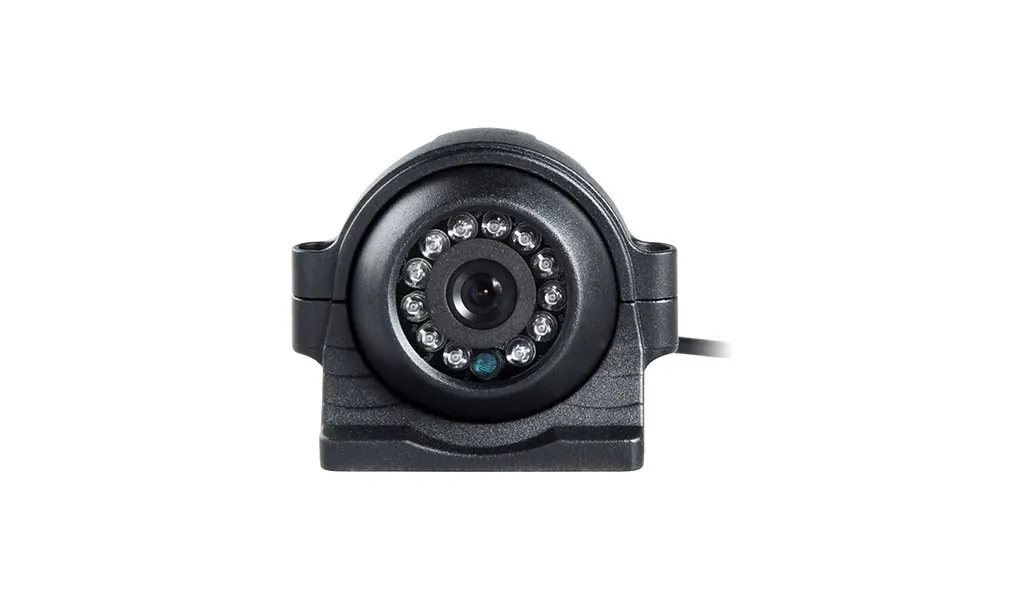
Night Vision for Commercial Vehicles: How to Read Lux and IR Specifications
How infrared night vision works on vehicle cameras: lux ratings, 650 versus 850 nm LEDs, IR range, backscatter and why housing design decides image quality.
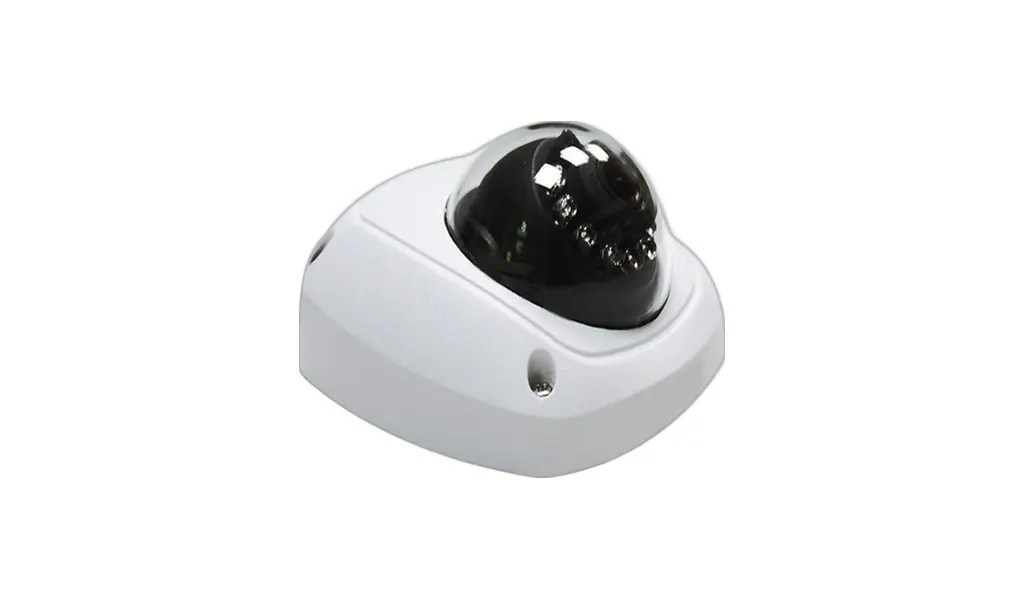
25, 30, 50 or 60 fps: What Actually Limits a Vehicle Camera’s Frame Rate
Why a camera that can run at 60 fps ships at 25, what the analogue and processor limits are, and how to check a frame rate claim.
AHD vs IP vs CVBS: Which Video Standard for a Vehicle Fleet?
AHD, IP and CVBS compared for commercial vehicles: resolution, cable distance, latency, cost, recording quality and which standard suits which installation.
Looking for a reliable camera system supplier?
Tell us your vehicle type and application — we will recommend the right system and quote within 24 hours. Distributors and OEM/ODM projects welcome.