
17. Thermal Imaging Cameras for Trucks: Detection Distances and Use Cases
An infrared LED camera illuminates the scene it is looking at. A thermal camera sees heat that is already there. On an unlit road at night that difference is measured in hundreds of metres — and the two figures buyers compare first, resolution and detection distance, mean very little without the third one, thermal sensitivity.
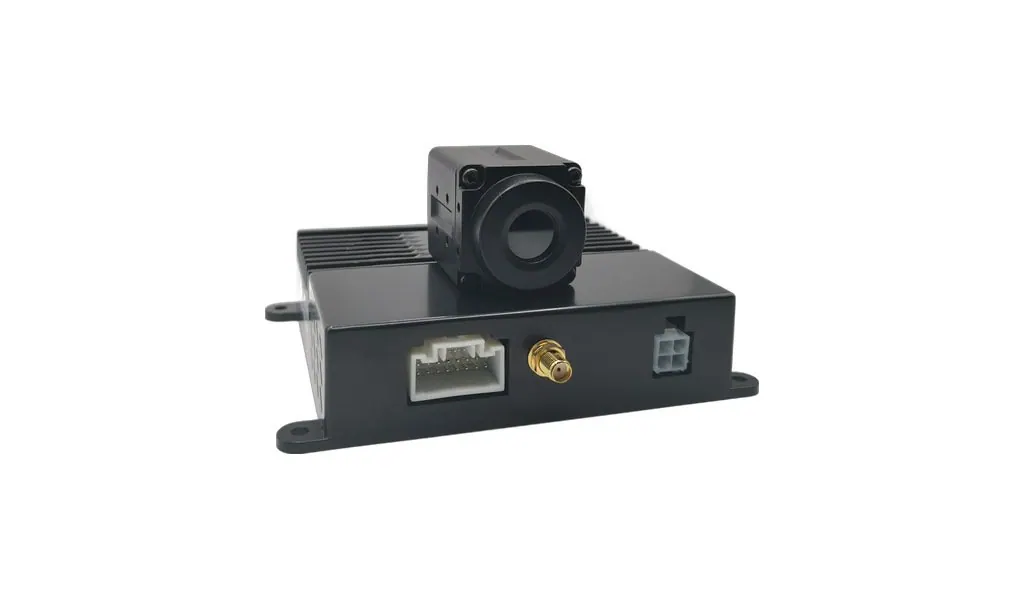
Key takeaways
- Thermal detects emitted heat, so it works in darkness, glare and light fog.
- Range comes from the lens; resolution mainly decides how much detail you get at that range.
- A 3.6 mm lens covers 49 x 37 degrees; a 10 mm lens reaches much further and much narrower.
- Thermal is defeated by a dirty lens cover like any other camera, and by glass in front of the lens.
How a thermal camera sees
A thermal camera uses an uncooled microbolometer detector — in our range a vanadium-oxide array — that responds to long-wave infrared radiation in the 8–14 μm band. Every object above absolute zero emits in that band, and living things emit considerably more than the road or the roadside vegetation. The camera converts that into a greyscale image where warmer objects are brighter.
The key practical consequence: thermal imaging needs no light at all, and it is not confused by headlight glare, oncoming beam patterns or the flare that ruins a normal camera at night.
The four specifications that matter
| Specification | What it means | Good value |
|---|---|---|
| Detector resolution | How much spatial detail the image contains | 256 × 192 minimum; 640 × 512 for identification |
| NETD | The smallest temperature difference it can resolve | ≤ 50 mK — lower is better |
| Pixel size | Indicates detector generation | 12 μm is current mainstream |
| Lens focal length | Trades field of view against distance | Wide for manoeuvring, narrow for distance |
Why NETD matters more than buyers expect
Resolution tells you how many pixels the image has. NETD tells you whether those pixels contain useful information. A 256 × 192 detector with a NETD of 40 mK produces a clearer, more contrasty image in mild weather than a higher-resolution detector with a NETD of 100 mK, because in mild conditions the temperature difference between a person and the background is small. A camera with poor thermal sensitivity simply shows a uniform grey mush, and NETD is the figure we ask for first because it is the one most often left off the sheet.
Calculating detection distance
The industry rule of thumb is that reliable detection needs the target to occupy three or four pixels across its critical dimension, and identification needs eight to twelve. Worked through for a human target about 0.5 m wide:
| Lens | Field of view | Human detection | Vehicle detection |
|---|---|---|---|
| 3.6 mm | 49° × 37° | < 85 m | < 125 m |
| 10 mm | 18° × 13° | < 250 m | < 320 m |
Identification — recognising that the target is a person and what they are doing — happens at roughly a third of those distances. When a supplier quotes a single detection distance without stating the lens, the target size and the criterion, the number is not comparable with anything; we ask for all three before putting a distance into a quotation.
Where thermal earns its cost
- Unlit rural routes. Pedestrians, cyclists, livestock and stopped vehicles beyond the headlight beam are detected far earlier than with any visible-light system.
- Mining and quarry haul roads. Dust in the air scatters the light from LED illuminators back into the lens, making them nearly useless. Thermal radiation passes through airborne dust far more effectively.
- Rail and depot movements. Detecting a person on or near the track at long range is a safety requirement, and thermal does it without any lighting infrastructure.
- Agricultural machinery at night. Fields at night contain people and animals that lamps do not reliably reveal.
- Search and marine applications. Finding a person in darkness, haze or light fog.
Where thermal does not help
- Reading detail. A thermal image shows heat, not texture. You cannot read a registration plate, identify a face, or read a sign.
- Warm-weather contrast. On a hot day the useful range drops significantly.
- Replacing a visible camera. Thermal should be a second channel, not a replacement. Run one thermal channel for detection and one visible channel for detail.
- Through glass. Ordinary glass is opaque to long-wave infrared, so a thermal camera must have an unobstructed view — you cannot mount it behind a windscreen or a standard lens cover.
Practical installation
- Mount it clear of the windscreen and of any covering. The lens must see out unobstructed — glass blocks the thermal band entirely.
- Specify the lens for the job. A wide lens is right for low-speed manoeuvring; a narrow lens is right for highway detection. Choosing the wide lens for a highway application wastes most of the camera’s capability.
- Check the defrost function if the fleet operates near or below freezing. A thermal lens ices like any other, and an iced lens is blind.
- Expect AHD output. Our thermal cameras output standard AHD, so they connect to the same monitors and recorders as the rest of the range without special hardware.
Thermal is normally fitted alongside a visible camera rather than instead of one, so the recording questions are the same as in the recorder guide, and the night side of the visible channel is covered in night vision explained. Lens and resolution options are listed in the thermal range.
Frequently asked questions
Can a thermal camera see through fog?
It performs much better than a visible-light camera in light fog, smoke and dust, which is why it is used in mining and firefighting. Dense water fog still attenuates long-wave infrared significantly, so it is not a complete solution — but the degradation is far less severe.
Does it work in daylight?
Yes, but with reduced contrast. In sunny conditions the road surface can be as warm as a person, so the image is less striking. Midday on a hot day is the worst case; night and cold weather are the best.
Do I need a separate monitor for a thermal camera?
No. Our thermal cameras output AHD, so they use the same monitors and recorders as the rest of the range. Many customers run one thermal and one visible channel side by side on a split or quad display.
Is thermal output recorded?
Yes, on any AHD recorder. Thermal footage is valuable as evidence because it shows what was genuinely visible to the driver at the time — which is often the central question in a collision investigation.
Related articles
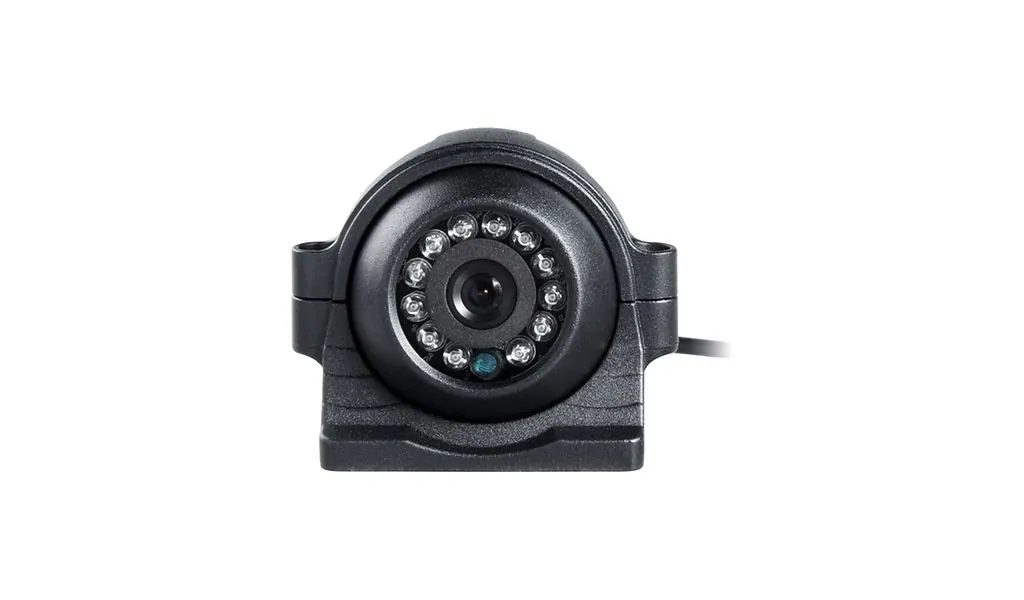
06 Night Vision for Commercial Vehicles: How to Read Lux and IR Specifications
How infrared night vision works on vehicle cameras: lux ratings, 650 versus 850 nm LEDs, IR range, backscatter and why housing design decides image quality.
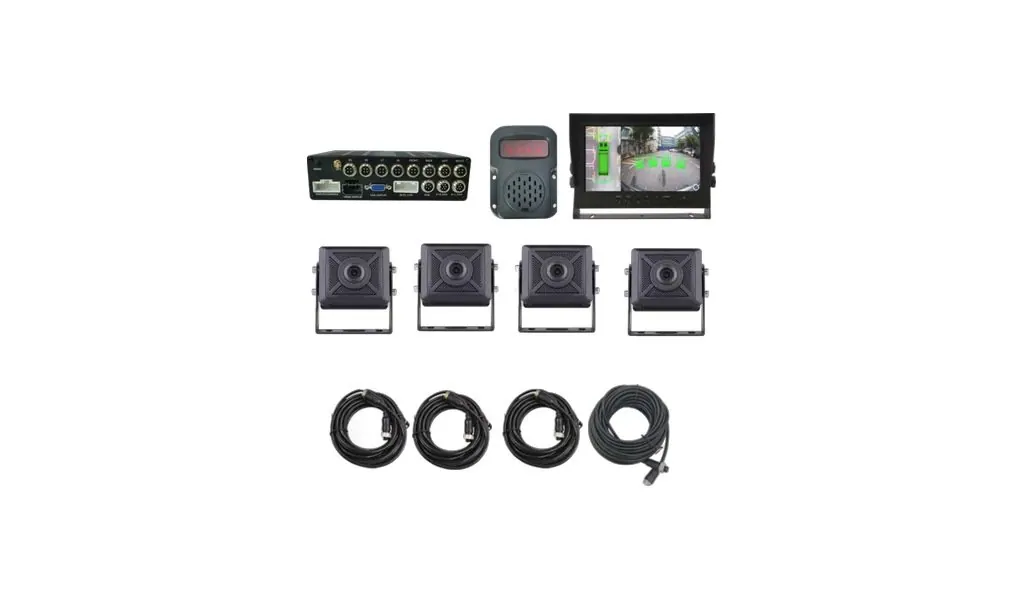
14 360° Panoramic vs BSD Radar: Which Blind Spot System Do You Need?
Comparing 360° panoramic systems with camera-based BSD and ultrasonic radar: what each detects, how each fails, and how to combine them on trucks and buses.
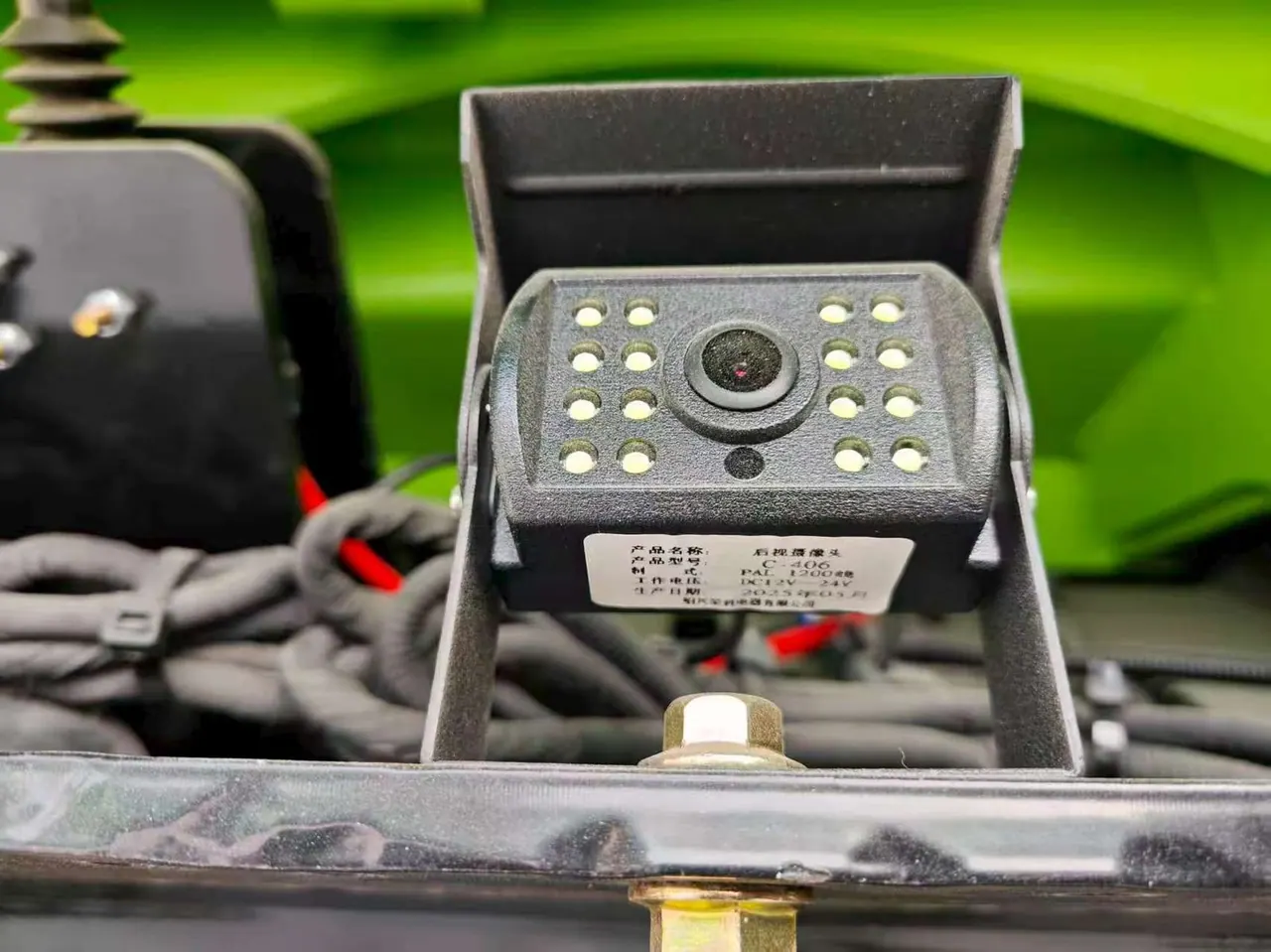
01 How to Choose a Truck Camera: The Complete Buyer's Guide
A practical guide to specifying commercial vehicle cameras: position, resolution, viewing angle, night vision, waterproof rating and connector type.
Looking for a reliable camera system supplier?
Tell us your vehicle type and application — we will recommend the right system and quote within 24 hours. Distributors and OEM/ODM projects welcome.