
14. 360° Panoramic vs BSD Radar: Which Blind Spot System Do You Need?
A 360 camera shows the driver everything. A radar tells the driver something is there. On a large vehicle you often need both, and knowing which one addresses which failure is the difference between a useful system and an ignored one. When a fleet tells us "the driver ignores the beeping", that is nearly always a specification problem wearing a driver problem’s clothes.
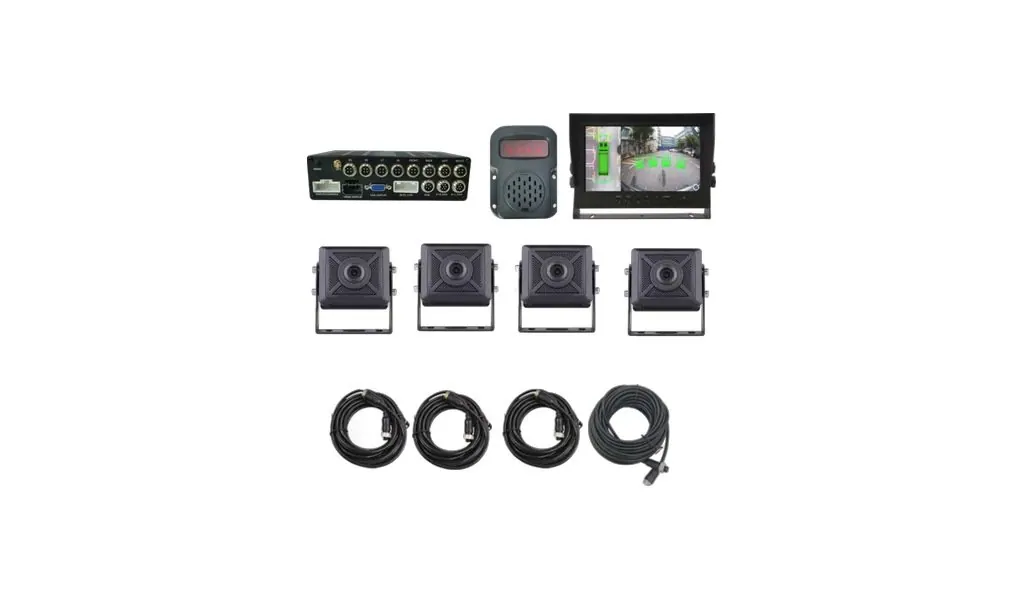
Key takeaways
- A 360 system shows the driver everything; a BSD system tells the driver something.
- Camera detection fails in the dark, in heavy rain and behind a dirty lens cover.
- Ultrasonic radar measures distance and closing speed, but cannot identify what it found.
- Speed gating is what stops a blind-spot alarm from being switched off in week one.
What each technology actually does
| 360° panoramic | Camera BSD | Ultrasonic radar | |
|---|---|---|---|
| Detects | Everything visible to its four cameras | People and vehicles it recognises | Any object within range |
| Classifies | No — it is an image | Yes — person, cyclist, vehicle | No — proximity only |
| Works in darkness | With IR and headlights | With IR | Unaffected by light |
| Works in heavy rain | Degraded | Degraded | Mostly unaffected |
| Affected by dirt | Yes, visibly | Yes, silently | Rarely |
| Gives the driver | A bird’s-eye picture | A classified warning | A distance-based warning |
| Typical range | Vehicle length plus a few metres | Up to about 10 m | 0.3–5 m |
Where a 360 system earns its cost
- Complex manoeuvring. A tipper with a raised body, a mixer with a rear chute, or any vehicle with an overhanging structure has multiple blind zones that no single camera covers.
- Confined spaces. Depot yards, construction sites and narrow city streets where the driver is judging clearance in several directions at once.
- Driver confidence. A single bird’s-eye view is easier to interpret than four separate monitors, which reduces the chance that the driver simply does not look.
Where radar or camera BSD earns its cost
- The driver did not look. A picture on a screen only helps if the driver looks at it. A warning reaches the driver regardless.
- The driver looked too early. A cyclist who arrives alongside after the check is invisible to a monitoring system but very visible to a warning system.
- Low-speed pulling away. The dangerous window for a large vehicle is 0–20 km/h, which is exactly where a speed-gated BSD system is designed to operate.
Why camera BSD and radar are complementary
Camera-based detection classifies what it sees, but it is degraded by heavy rain, low sun and dirt — and it fails silently, which is worse than failing loudly. Ultrasonic radar measures distance reliably in any light and is barely affected by weather, but it cannot tell a plastic bag from a child, so it produces false alarms. Crews lose patience with each of them, for opposite reasons: one stops seeing, the other will not stop shouting.
Fusing the two gives you what neither provides alone: radar establishes that something is genuinely close, and the camera establishes what it is. The LRS-371AI does exactly this — four-way AI visual detection alongside a four-direction, sixteen-probe ultrasonic radar array with a speed sensor, combined into a single warning.
Speed gating: the feature that makes it usable
Blind spot warnings matter at low speed. At motorway speed, a warning light for a vehicle in the adjacent lane is noise, not information. GPS-based speed gating — warning below a configurable threshold such as 20 km/h — is what makes the system tolerable on a mixed-duty vehicle. Recording continues at all speeds; only the warning is suppressed. We treat that threshold as a commissioning decision to be agreed with the fleet, not a factory default to be left alone.
How to choose
- If the problem is manoeuvring in tight spaces, start with 360. It solves more of the problem per pound than any other single system.
- If the problem is a specific dangerous side — the nearside in urban traffic, for example — a camera BSD with radar on that side is cheaper and more targeted than a full 360 installation.
- If you operate in a regulatory environment that requires cyclist protection, check what the regulation specifies. Some require a visible field of view, some require a warning; they are not the same requirement.
- If you cannot decide, specify both on the worst vehicle in the fleet, measure the result, and roll out from there. A pilot on one vehicle is cheaper than a fleet-wide mistake.
For most fleets the deciding factor is not the technology but the coverage question underneath it: how to choose a truck camera works through the positions one at a time, night vision explained covers the part of the day when a camera stops helping, and the truck camera range lists the units that carry the detection.
Frequently asked questions
Does a 360 system warn the driver?
A basic 360 system only displays. Warning requires either AI detection in the controller (as in the LRS-371AI and LRS-372) or a separate radar array. Check which functions are included in the specific model — the word "360" on its own only promises a stitched image.
Can I add BSD to an existing system?
Usually yes. A standalone AI camera such as the JPC-181 needs only power and a monitor or recorder connection, so it can be added to a vehicle that already has cameras without replacing anything. Radar arrays generally require a controller that supports them.
Why does my radar alarm go off for no reason?
Common causes are a detection zone set too wide, a probe aimed at a fence or wall, rain-saturated ground reflecting the signal, and vibration moving a probe out of alignment. Reduce the zone, check the probe angles and confirm the mounting is rigid before assuming a hardware fault.
Related articles
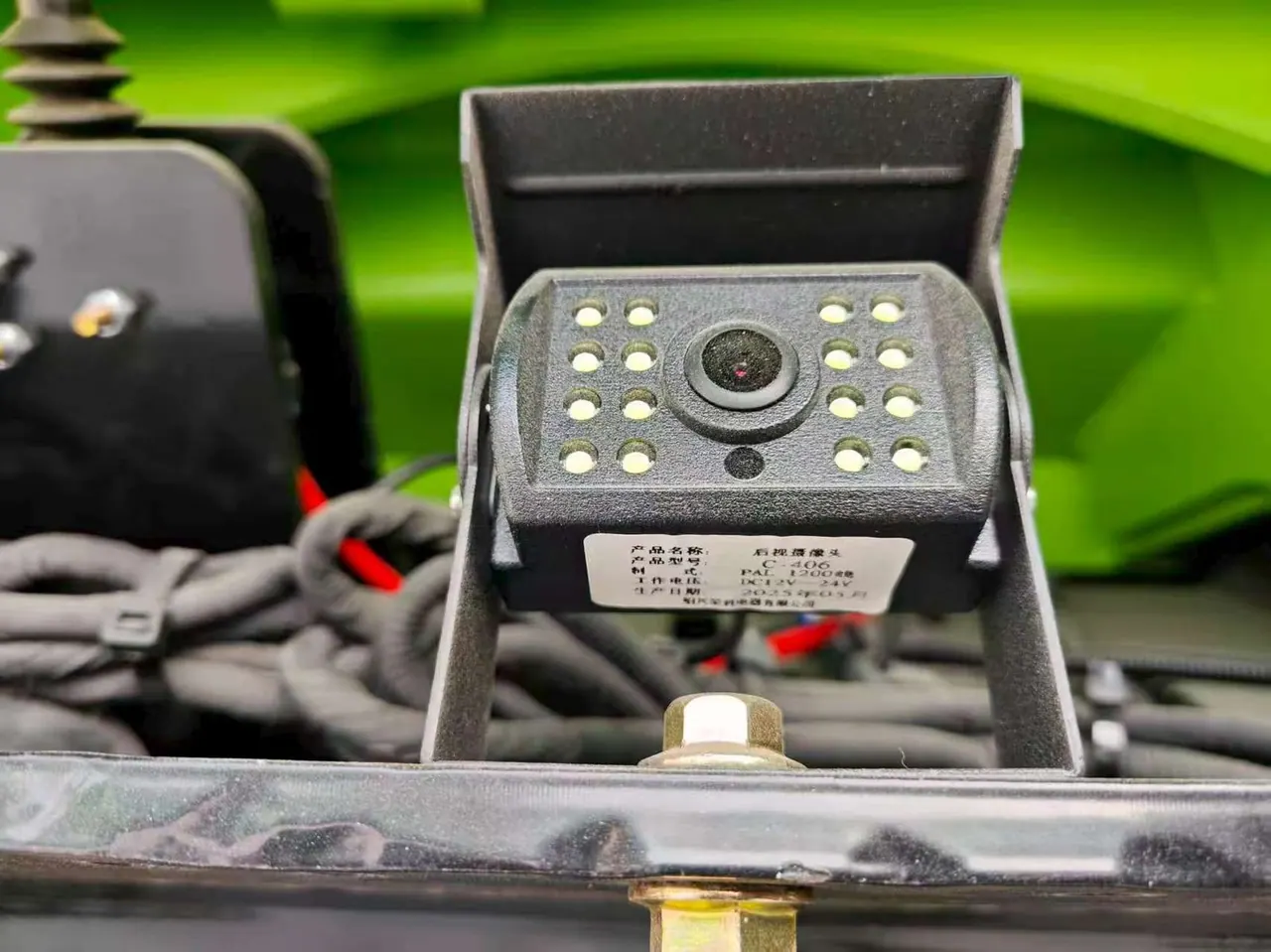
01 How to Choose a Truck Camera: The Complete Buyer's Guide
A practical guide to specifying commercial vehicle cameras: position, resolution, viewing angle, night vision, waterproof rating and connector type.
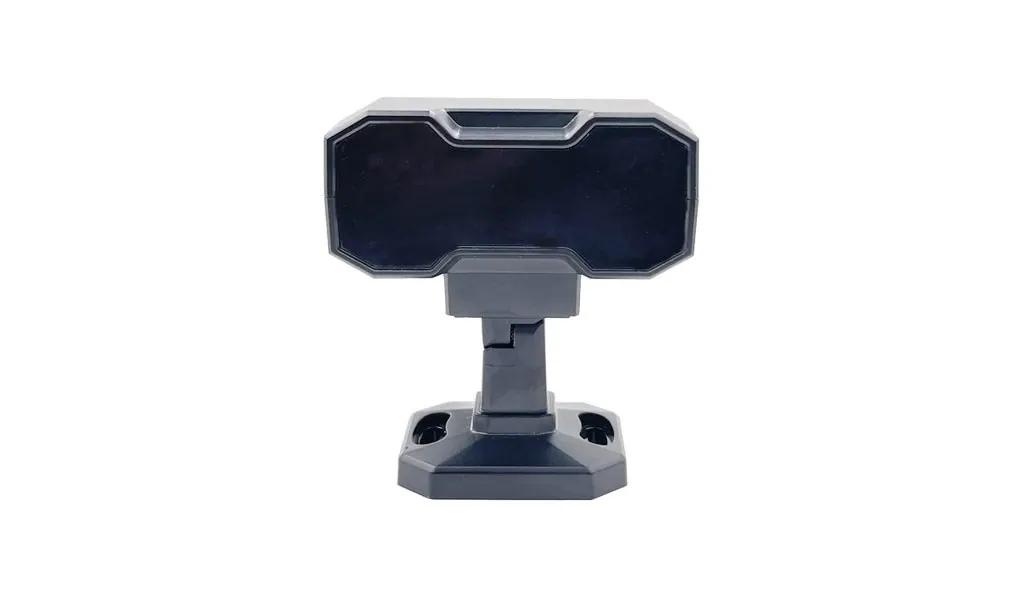
15 DMS and ADAS Explained: Fleet Safety Monitoring That Works
What driver monitoring (DMS) and advanced driver assistance (ADAS) actually detect, how they differ from BSD, and how to deploy them so the data gets used.
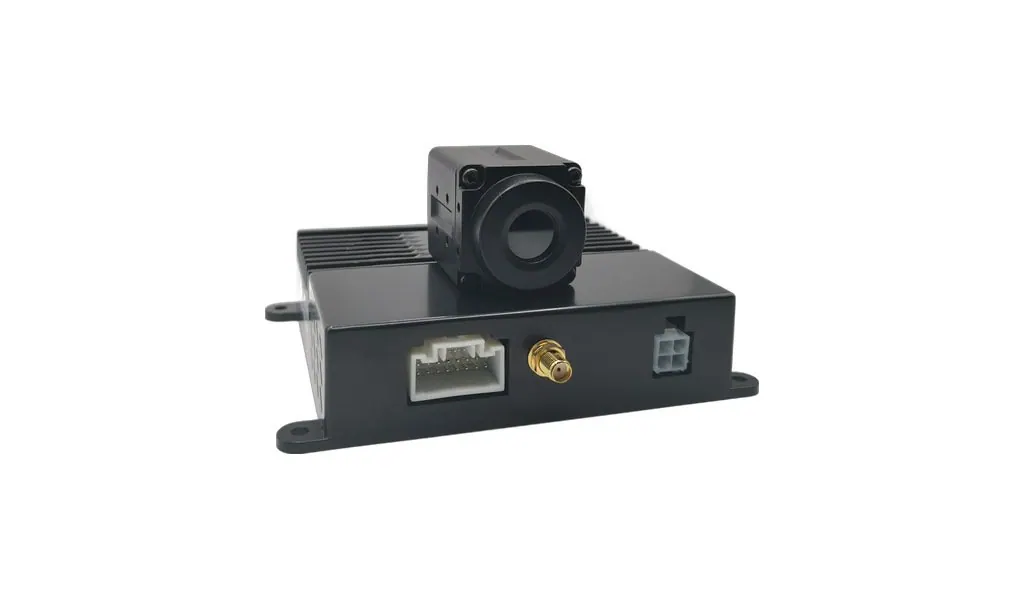
17 Thermal Imaging Cameras for Trucks: Detection Distances and Use Cases
How vehicle thermal cameras work, what 256×192 and 640 resolution mean on the road, how to calculate detection distance, and where thermal beats infrared.
Looking for a reliable camera system supplier?
Tell us your vehicle type and application — we will recommend the right system and quote within 24 hours. Distributors and OEM/ODM projects welcome.