
How We Test Equipment That Has to Survive a Vehicle
A camera that works on the bench says very little about a camera that works after three winters. Our testing is built around the failure modes we see in the field, not around a checklist.
Environmental testing
- Waterproofing. IP-rated assemblies are tested against the rating claimed — IP69 and IP69K for high-pressure water, IP67 and IP68 for immersion. Ratings are only meaningful in the context of the test, so we quote the test conditions alongside the number.
- Thermal cycling. Units are cycled between cold and hot extremes to expose seal fatigue, focus drift in plastic lens barrels and condensation inside housings.
- Shock and vibration. Standards are set by application: 5.9 G for forklift and yard machinery, 5 G for thermal and high-vibration duty, 4.5 G for general truck cameras, and 5G shake resistance on the wireless range.
- Cold start. Cameras and monitors are qualified for cold start down to −30 °C, with automatic lens heating on the stainless and thermal models.
- Heat. Dashcams are qualified to operate at up to 90 °C internal temperature, which reflects a cab parked in direct summer sun.
Image quality
Every camera is checked for focus, colour accuracy, IR-CUT switching and night performance before packing. Because image quality is subjective, we test against reference images rather than against a pass/fail threshold alone — a camera that passes on numbers but produces a soft or hazy image does not ship.
Electrical testing
Commercial vehicle electrical systems are electrically hostile. Our designs include reverse-polarity protection, transient voltage suppression (TVS), ESD protection and, on the 360 platform, ISO-7637 compliance and a wide DC 12–36V input range. Monitors are rated to 40V on the mirror range specifically because generic units that stop at 30V black out when an alternator surges.
Certification and documentation
We hold and supply certification documentation for the relevant product families, including CE, RoHS and FCC for camera and recorder ranges, and EMC and RoHS certification for camera and monitor ranges. Where a customer's market requires a certification we do not hold, we will say so at quotation stage rather than after the order has been placed. Certification documents are supplied as copies with the shipment for private-label programmes.
Production inspection
Production runs against a locked specification. Incoming components are inspected on receipt, in-process checks cover optical assembly and sealing, and finished goods are inspected against the approved sample before packing. For private-label programmes the approved sample is retained as the reference for every subsequent shipment.
What we do when something fails
Field failures are recorded by model and returned to engineering, not quietly replaced. A recurring failure is a design input: it changes a seal, a bracket, a lens barrel or a firmware threshold. Several of our current product generations exist because a field failure was traced properly rather than patched.
Certificates we can send with a quotation
The documents below cover the camera, monitor, wireless and accessory ranges. Click one to open the original, or ask for the model-specific document set with your enquiry.
Product certification
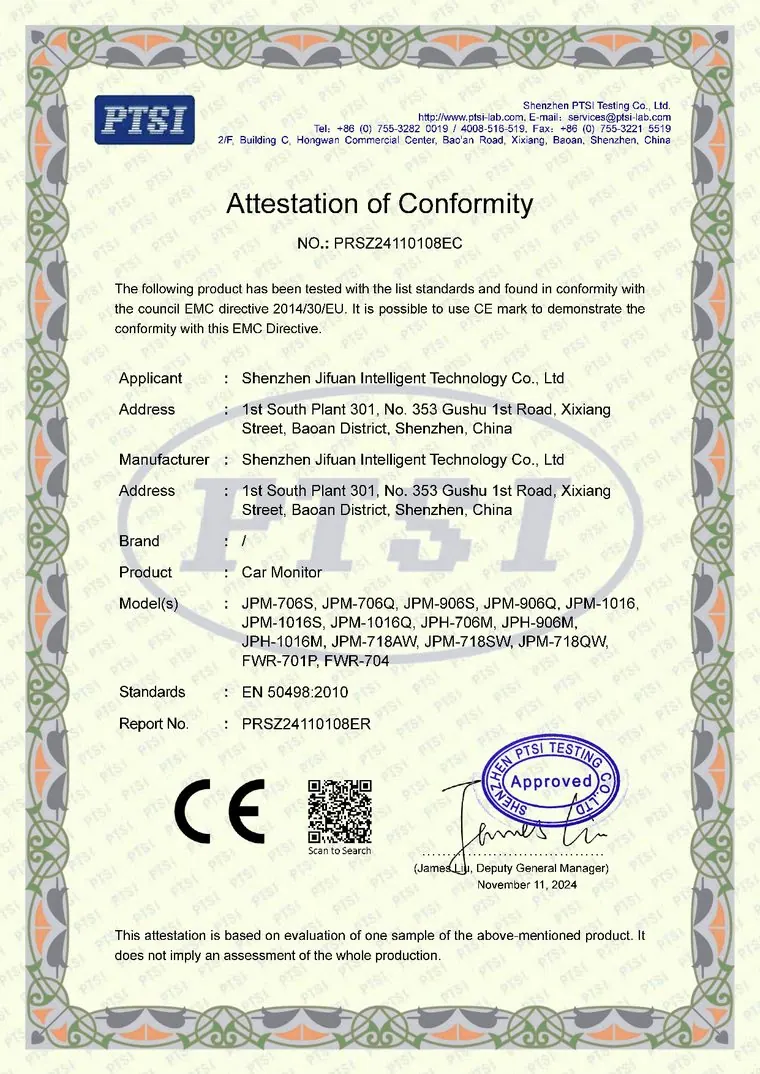
Covers JPM-706, JPM-906, JPM-1016, JPH-706/906/1016, JPM-718 and FWR-701P monitors.
Download PDF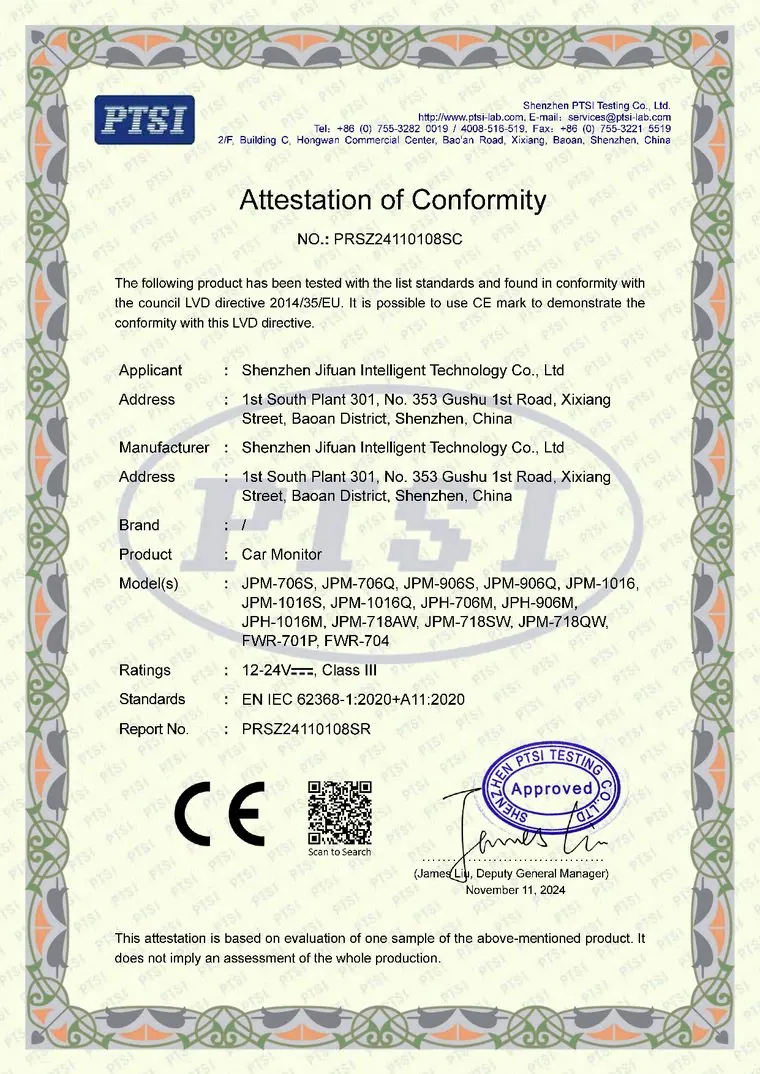
Low-voltage directive certificate for the same monitor range.
Download PDF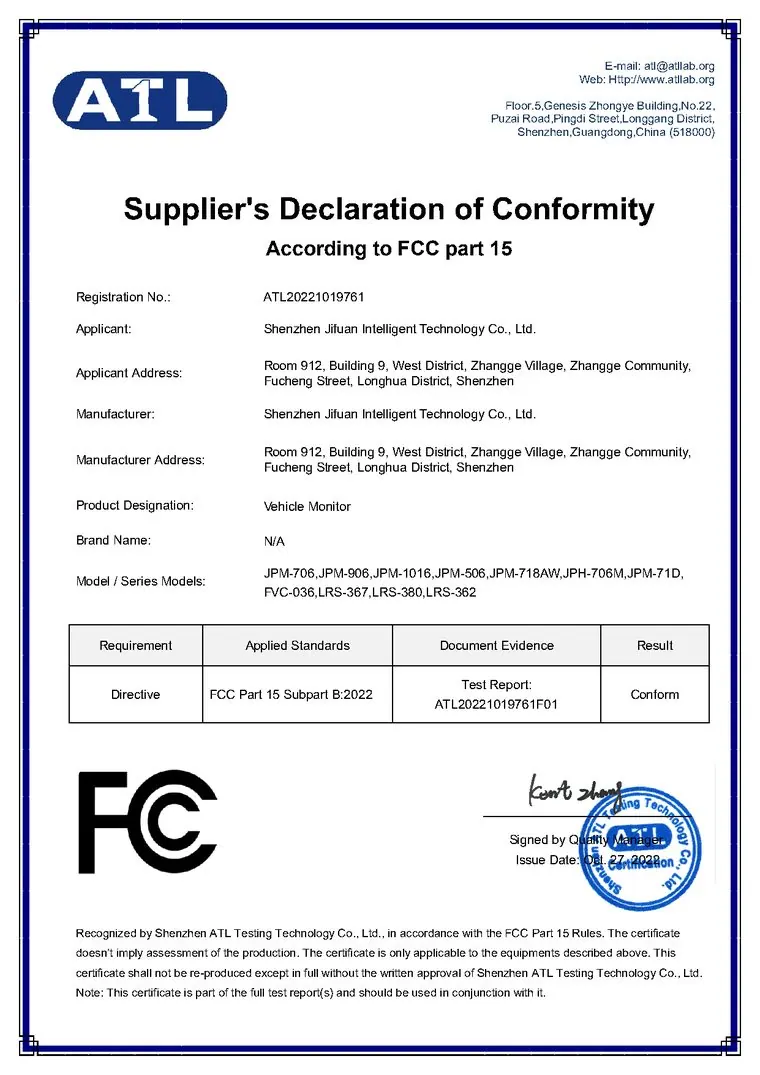
Vehicle monitor compliance for the US market.
Download PDF
Earlier EMC certificate for the vehicle monitor range.
Download PDF
Wireless monitor kit compliance.
Download PDF
Covers JPC-01, 02, 07, 12, 18, 22, 27, 112, 117 and 119.
Download PDF
Same camera family as the 2021 EMC certificate.
Download PDF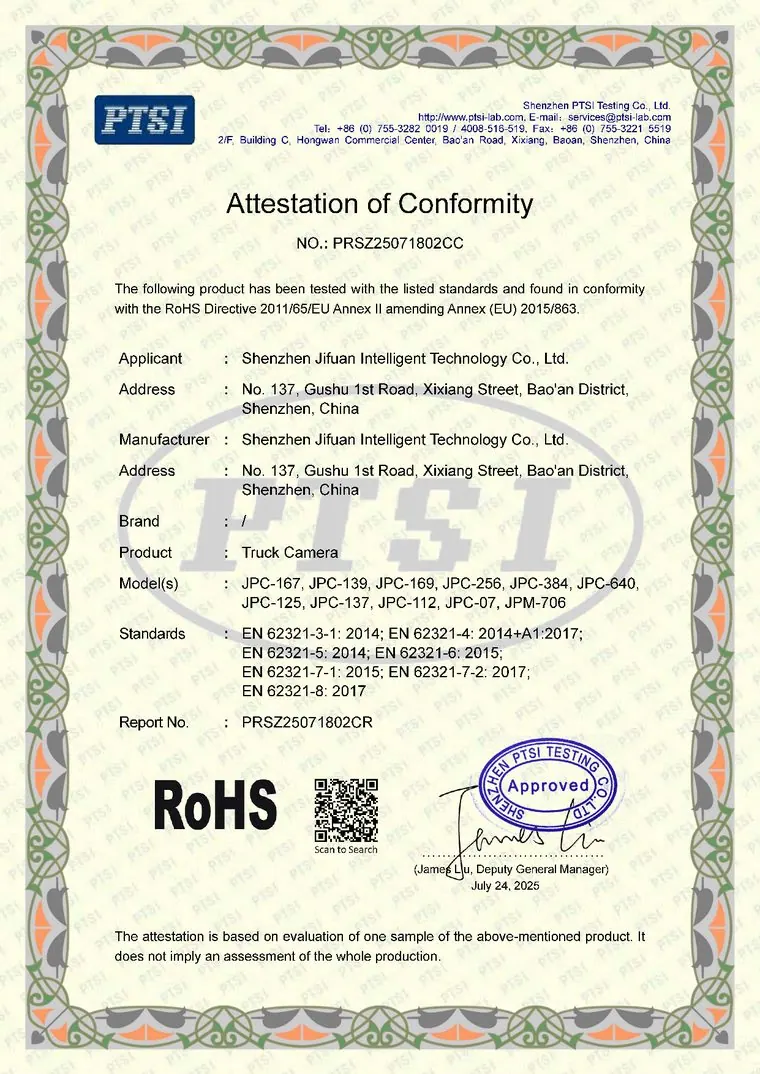
Combined RoHS certificate for the camera range; the REACH report is available on request.
Download PDF
Covers the aviation and extension cable range.
Download PDF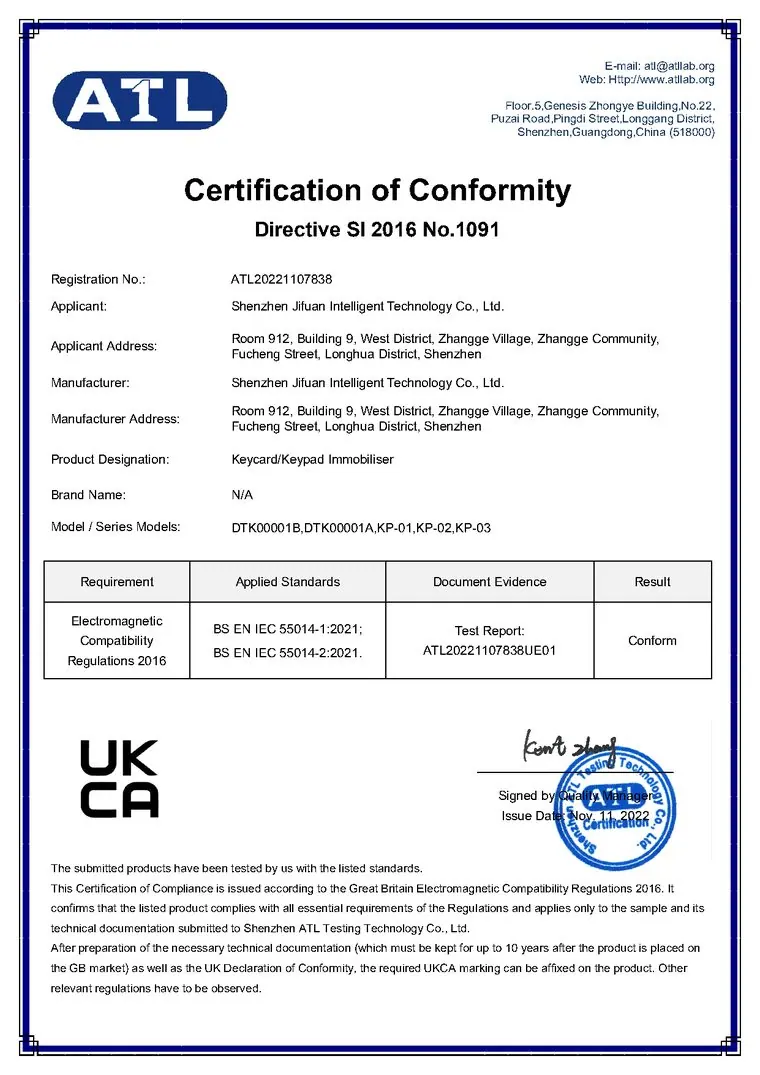
Covers DTK00001A/B, KP-01, KP-02 and KP-03.
Download PDFOEM project certification
These certificates were issued for products we build for customers. The customer name, address, brand and model are masked; the standards and test laboratory are unchanged.

Made for a customer; the brand, applicant and model are masked.
Download PDF
Same project as the CE-EMC certificate.
Download PDF
Made for a customer; the brand, applicant and model are masked.
Download PDF
Same project as the EMC certificate above.
Download PDFCompany & compliance

English translation of the Chinese business license, for supplier registration.
Download PDF
The representative we appoint for CE-marked products sold into the EU.
Download PDF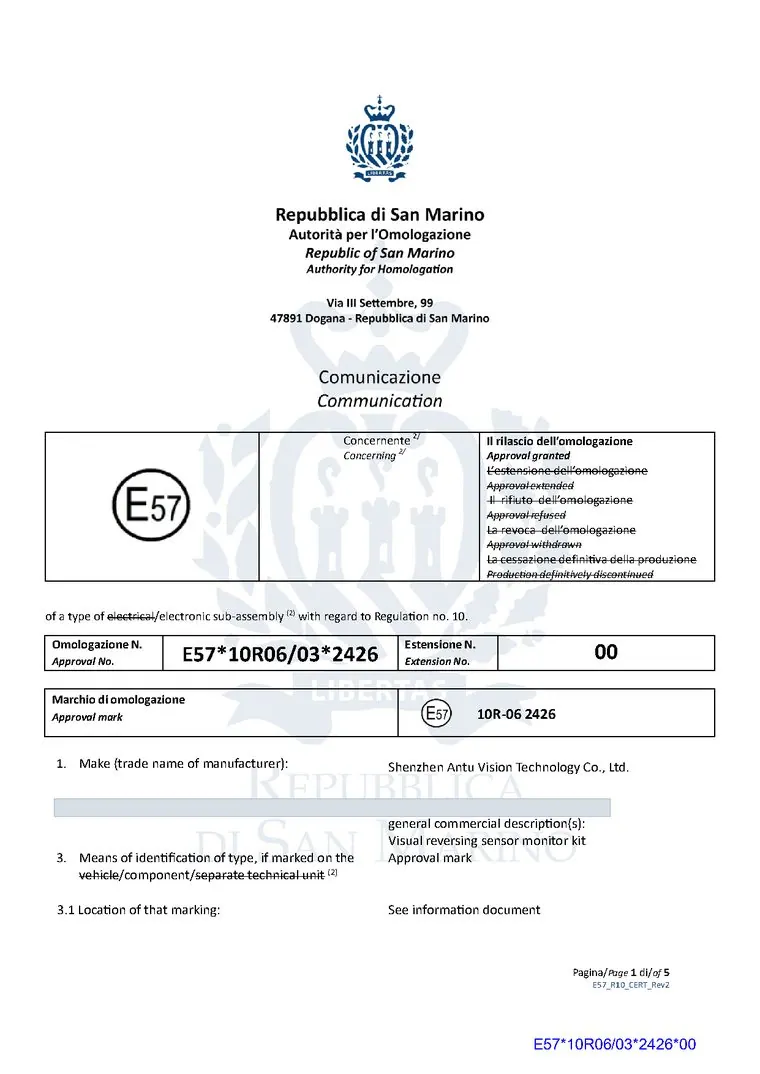
ECE R10 approval for a visual reversing sensor monitor kit. The production partner and the customer model code are masked.
Download PDFWhere the Testing Actually Happens
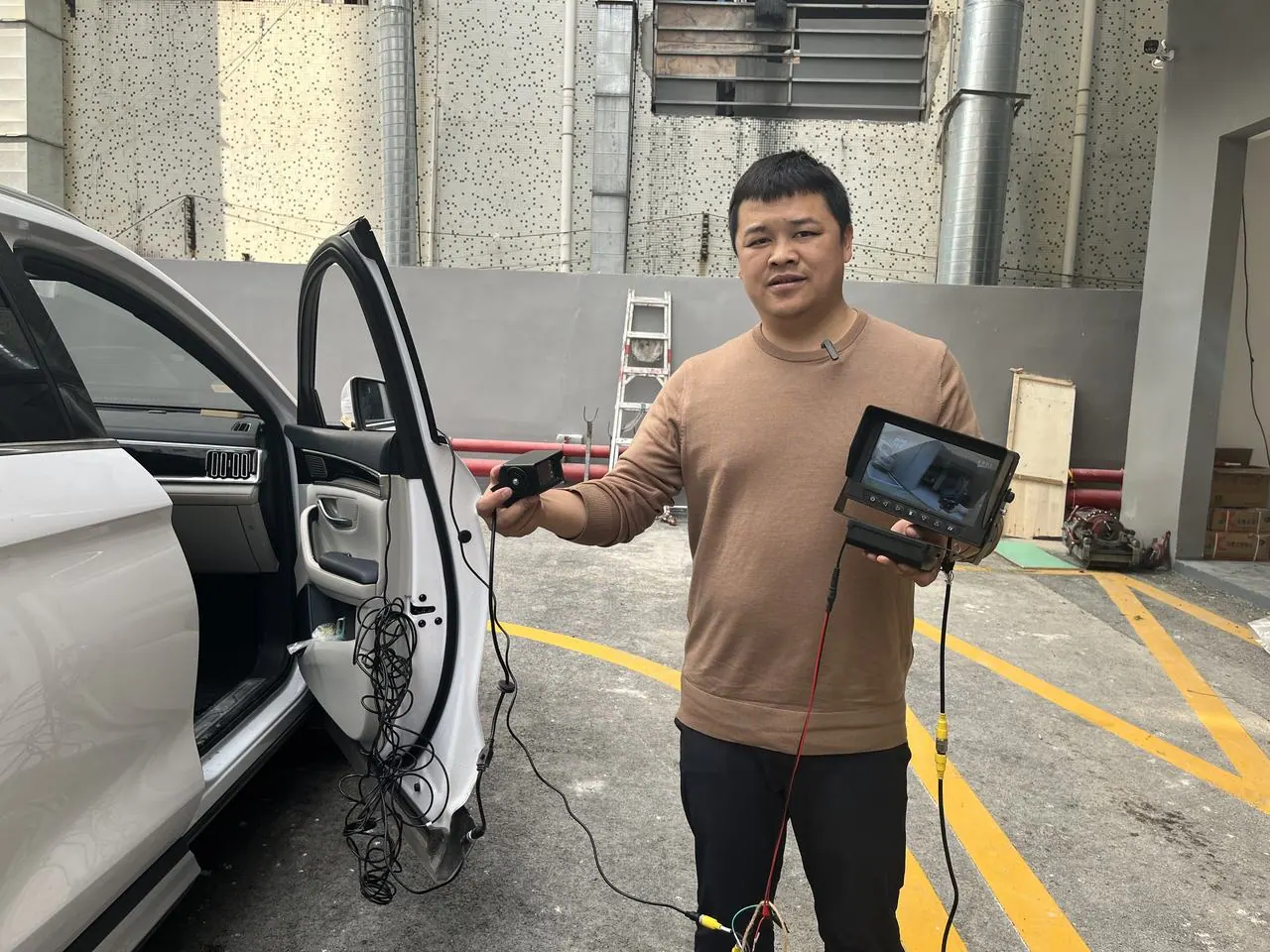
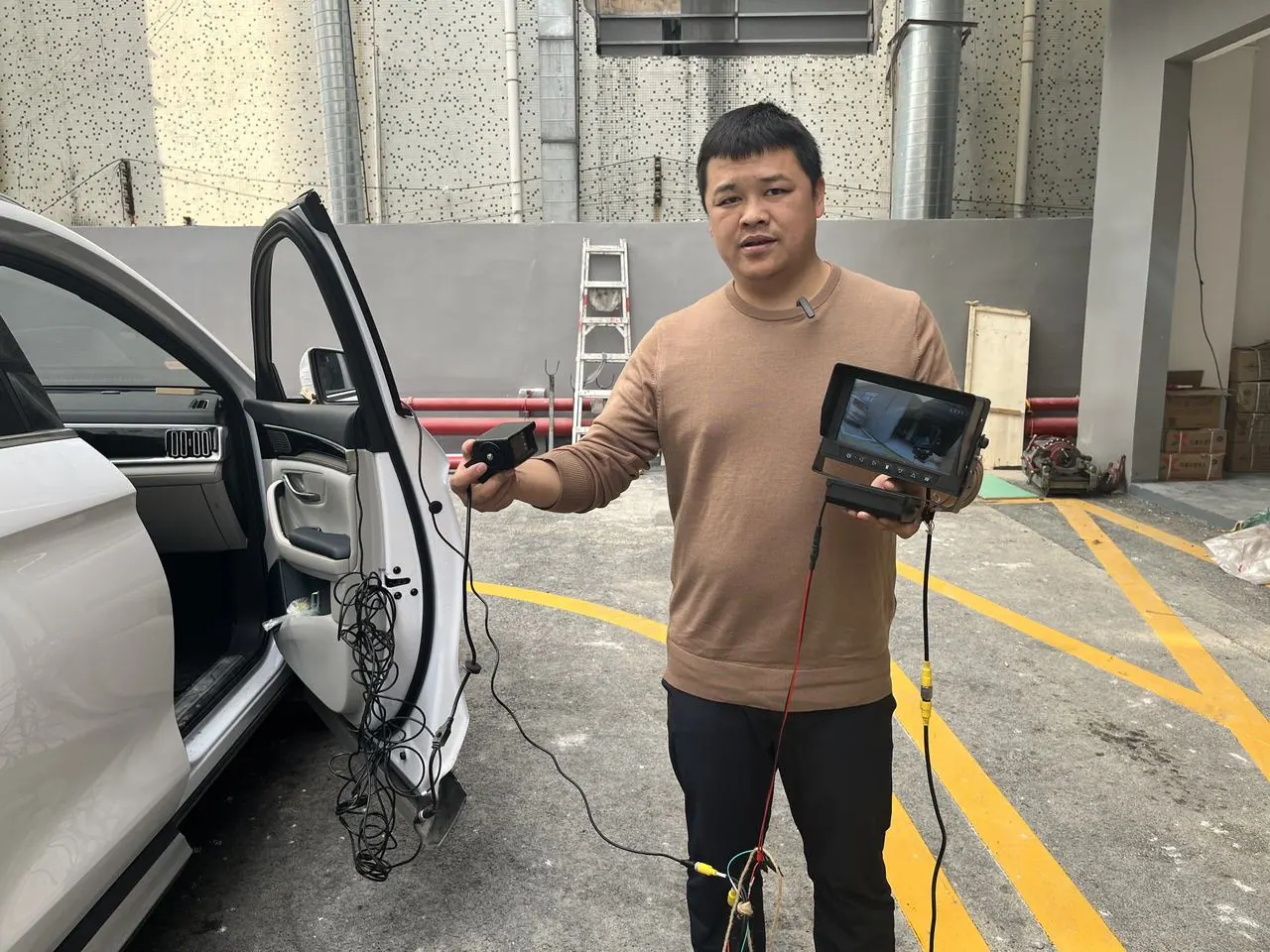
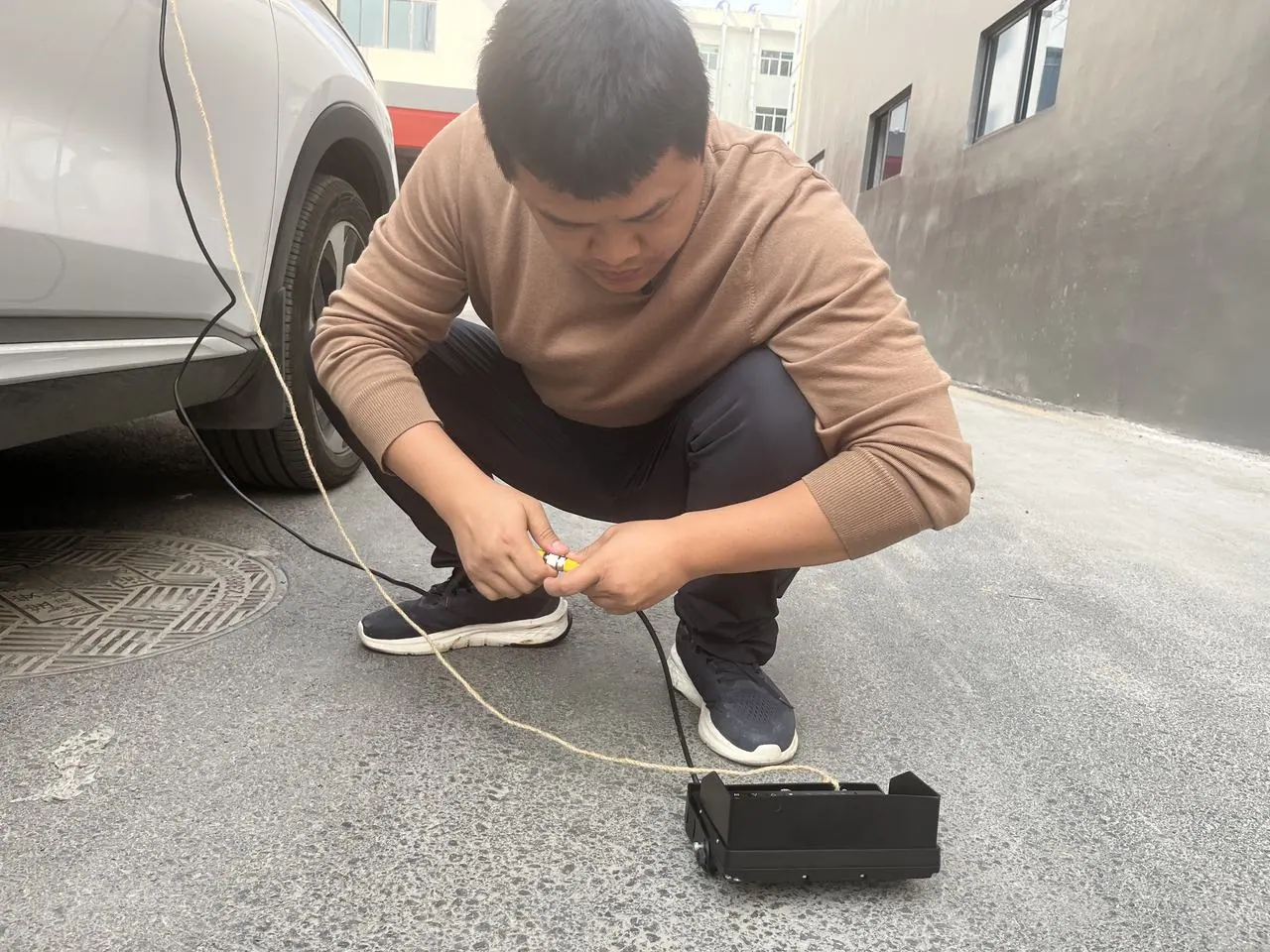
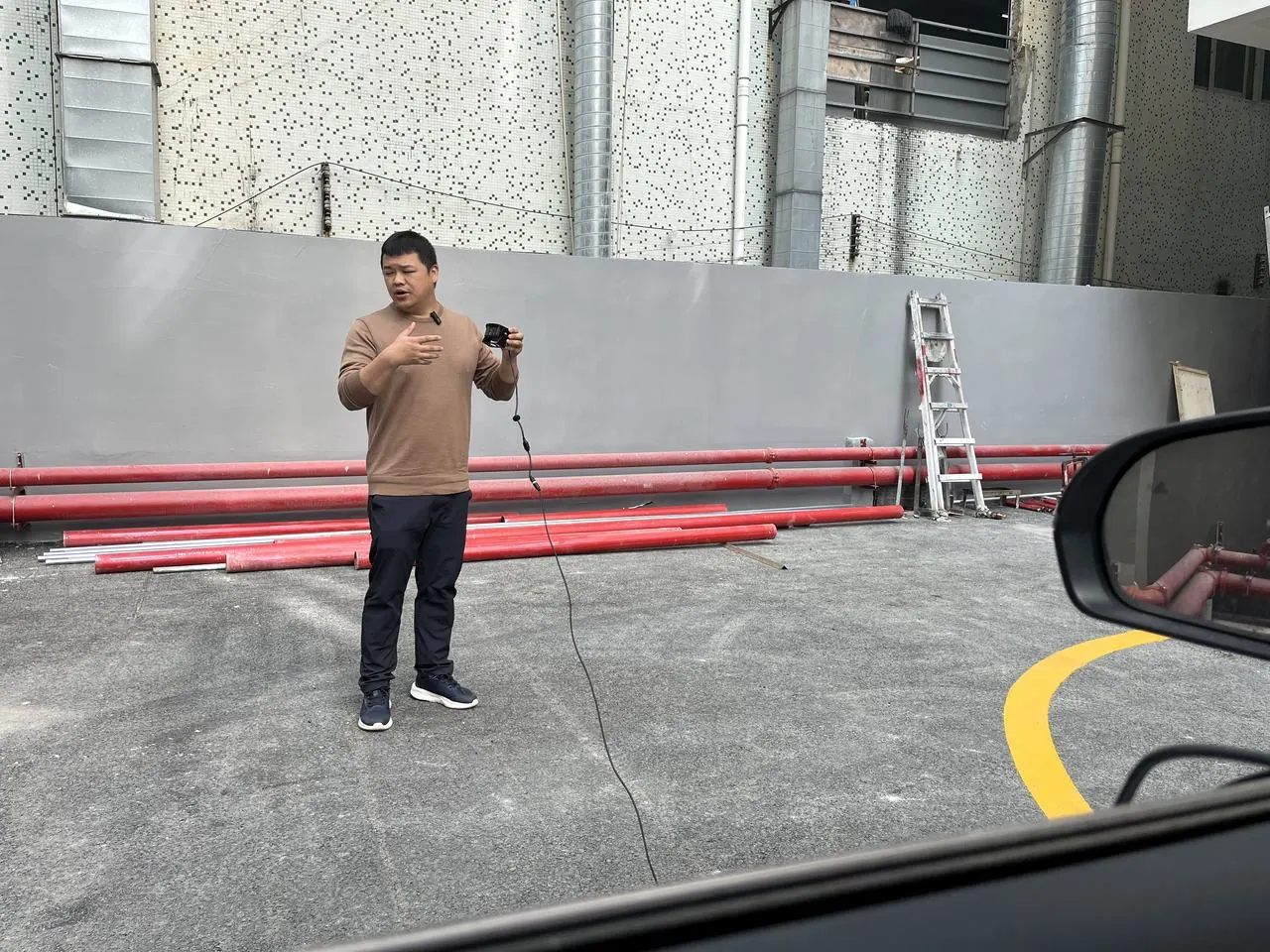
Our own benches: monitor and camera burn-in, camera calibration, sealing checks and final inspection before packing.
Looking for a reliable camera system supplier?
Tell us your vehicle type and application — we will recommend the right system and quote within 24 hours. Distributors and OEM/ODM projects welcome.