
Blind Spot Camera Systems for Trucks: What to Fit, Where to Mount It, and How to Check It Works
Most blind spot systems that fail in service were not badly made. They were fitted to a zone nobody measured, aimed at a distance nobody checked, and alarm-gated in a way that made the driver switch them off. This article is about the three decisions that actually decide the outcome.

Key takeaways
- Measure the zone before specifying anything: on a rigid truck it is typically 1–2 m wide and 3–6 m long.
- Camera, radar and 360° fail in different conditions, which is why serious installations use two of them.
- Nearest visible ground = height ÷ tan(tilt + half the vertical view); the tilt alone can leave a 0.9 m or a 2.3 m strip.
- An alarm that fires more than once or twice a shift is a specification defect, not a driver problem.
Start with the size of the zone you are trying to cover
A truck’s nearside blind area is not a vague region — it has dimensions, and they depend on how high the driver sits and how far out the mirrors reach. On a typical rigid vehicle with the driver 2.5 m above the road, the area beside the cab that no mirror covers runs roughly 1–2 m wide and 3–6 m long at mirror height.
That zone moves. It grows when the vehicle is loaded and the body settles, when the mirrors are folded or knocked, and when the vehicle is turning and the trailer or body swings out. Any system you fit is being asked to cover a target that changes shape during the day.
Three technologies, three different failure modes
Blind spot equipment falls into three families. They are usually sold as alternatives. In practice each fails in a different condition, which is why the strongest installations combine two of them.
| Technology | What it actually does | Fails when | Typical role |
|---|---|---|---|
| Camera with AI detection | Recognises pedestrians and vehicles inside an adjustable zone and raises a visual and audible alarm | Dark, heavy rain, or a dirty lens cover; a stationary person against a busy background | Warning the driver that something is there |
| Ultrasonic radar | Measures distance and closing speed in a defined field | The object is soft, angled, or too close to the sensor face; it cannot identify what it detected | Warning the driver that something is closing |
| 360° panoramic camera | Stitches four cameras into one view so the driver sees the whole area | Relies on the driver looking; calibration drifts, and it is weakest in the dark | Giving the driver the whole picture in a yard |
A camera tells the driver what is there. Radar tells the driver how fast it is closing. A 360° view shows everything at once and waits for a human to look at it. Conflating these three is the most common specification mistake in this category — and it is usually discovered when a driver reports that “the alarm went off for nothing”.
The failure modes are described in more detail, side by side, in 360° Panoramic vs BSD Radar.
Where a side camera has to sit, and why
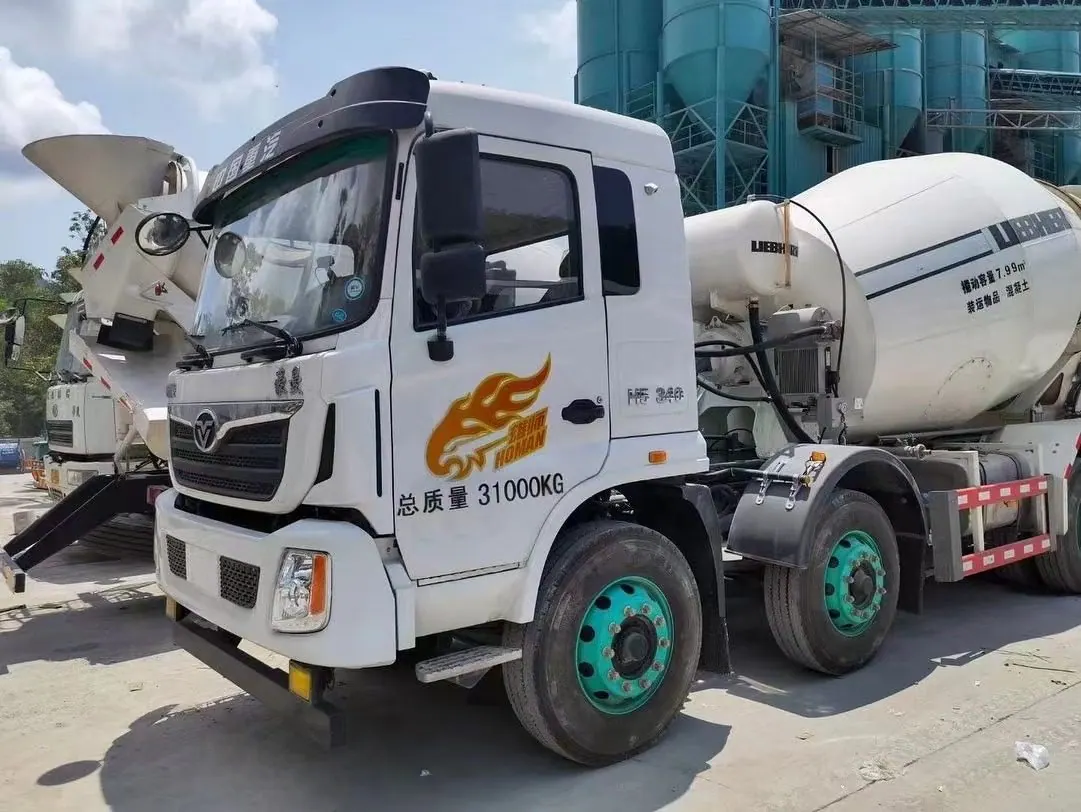
A side camera is judged by the ground it can see, not by its resolution. The nearest point it can see is arithmetic:
| Mounting position | Height | Down tilt | Nearest visible ground |
|---|---|---|---|
| Mirror arm or cab side | 2.5 m | 45° | 1.5 m |
| Body side, above the wheel | 1.8 m | 35° | 1.5 m |
| Body side, low | 1.0 m | 30° | 0.9 m |
| Body side, low, shallow tilt | 1.0 m | 15° | 2.3 m |
The last two rows use the same camera at the same height and leave a blind strip of 0.9 m or 2.3 m depending only on the tilt. That difference is the gap between seeing a pedestrian’s feet and seeing nothing at all — and it is invisible on a bench test.
The same arithmetic decides a reversing camera at the back of the vehicle, and it is worked through with a tape measure in How to Fit a Reversing Camera to a Rigid Truck.
The alarm, not the camera, decides whether the system survives
A blind spot system that alarms on every parked car and every kerb is switched off within a week. This is not a driver attitude problem; it is a specification problem, and it is solved by gating the alarm to the moment when it matters.
- Gate on the indicator. A nearside warning is most relevant when the driver is signalling a turn or a lane change; outside that window it is noise.
- Gate on speed. A warning that fires at 60 km/h in traffic is ignored. Ours is configurable to warn only below a set speed — on the LRS-371AI the blind spot warning is gated below 20 km/h by default.
- Match the alarm to the event. A pedestrian inside the zone during a turn deserves an instant buzzer. Something 3 m away and stationary does not.
- Keep the alarm audible in the cab, and visible outside it. An external voice warning or an LED beacon tells the cyclist as well as the driver.
What the specification should contain
| Item | What to write down |
|---|---|
| Detection type | Camera-based recognition, ultrasonic radar, or both — and which side |
| Zone | How far back and how far out the zone must extend, in metres, measured on the vehicle |
| Alarm logic | What triggers it: indicator, speed gate, distance threshold, and the delay before it fires |
| Alarm outputs | In-cab buzzer, LED, voice broadcast, external speaker or beacon |
| Integration | Whether the alarm is recorded as an event on the recorder, with a timestamp and channel |
| Environmental rating | IP69 or IP69K for cameras and sensors, vibration rating for the body side |
| Supply | 12 V or 24 V, and transient protection for the vehicle type |
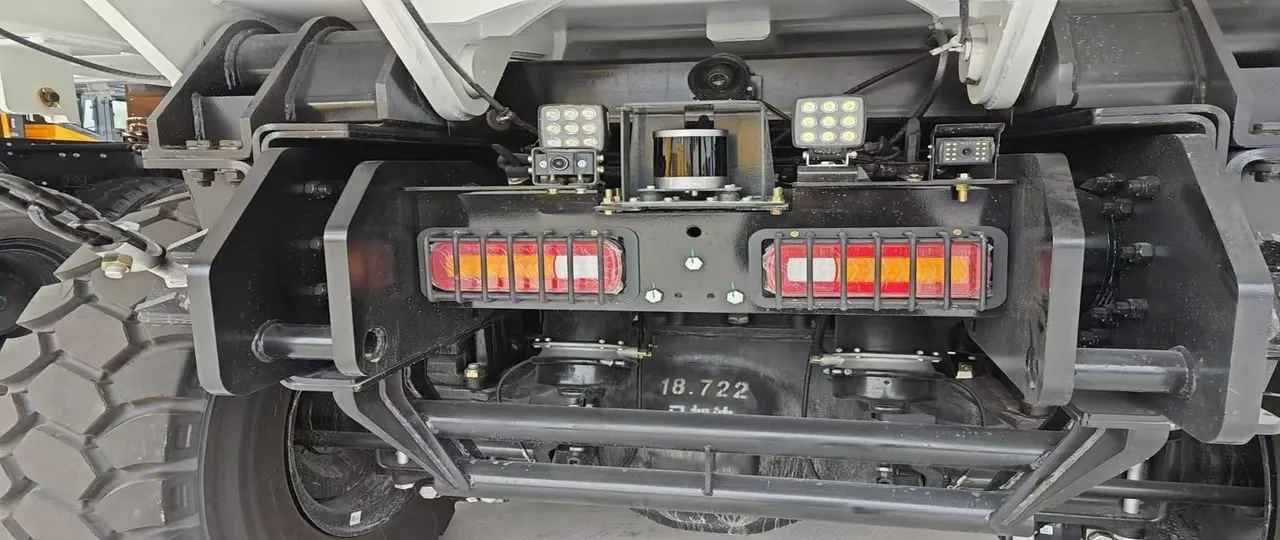
Where the vehicle already records, an AI camera can also write the event to the recorder — the JPC-181 integrates a recognition camera, a three-colour warning light and a buzzer in one housing. That is useful for two reasons: the driver gets a local alarm, and the fleet gets a timestamped clip of the event rather than a complaint with no evidence.
Before the vehicle goes back in service
- Measure the zone with a tape. Stand a person at the far end of the intended zone and confirm the system reacts; then move them to the near side and confirm again.
- Test at three speeds — stationary, walking pace, and about 20 km/h — because a system gated on speed will behave differently at each.
- Test in the dark, with the vehicle lights on. Camera detection that works in daylight and fails at night is the single most common disappointment.
- Count the false alarms over one full shift. If the count is not close to zero, change the gate before the driver changes the switch.
- Check the near blind strip at the front corner as well as the side — the camera covers what it can see, and the arithmetic above tells you what it cannot.
- Verify that an alarm event appears on the recorder if the specification promises it, with the correct channel and timestamp.
When a camera alone is not enough
- Where the risk is a closing vehicle, radar measures the closing speed; a camera recognising a car tells you it is there but not how fast it is arriving.
- Where the driver has to judge a gap, a 360° view is more useful than a warning, because the decision is spatial.
- Where the fleet must prove what happened, an event recorded from the same camera that raised the alarm is worth more than a separate log.
Frequently asked questions
Is a camera or radar better for truck blind spots?
They answer different questions. A camera with AI recognition identifies what is in the zone — a pedestrian, a cyclist, a car — and fails in the dark or in heavy rain. Radar measures distance and closing speed and works in poor visibility, but cannot tell you what the object is. Serious installations specify both on the side that carries the most risk.
How far back should a side camera zone extend?
Measure it rather than assuming: park the vehicle and find the point where a person becomes invisible in the mirrors. On a rigid truck with the driver 2.5 m up, that is typically 3–6 m back and 1–2 m out. Specify the zone from that measurement, then check the mounting arithmetic to confirm the camera can actually see the near edge of it.
Why do drivers switch blind spot alarms off?
Almost always because the alarm fires when nothing is at risk — parked cars, kerbs, stationary objects 3 m away. Gate the alarm on the indicator and on speed, and match the alarm type to the event. An alarm count of more than one or two per shift is a specification defect, not a driver problem.
Can the blind spot alarm be recorded?
Yes, on models designed for it — the alarm is written as an event on the recorder with a timestamp and channel, so a fleet can review the clip rather than relying on a verbal report. Confirm this at specification stage, because it depends on the camera and the recorder being configured to talk to each other.
Related articles
360° Panoramic vs BSD Radar: Which Blind Spot System Do You Need?
Comparing 360° panoramic systems with camera-based BSD and ultrasonic radar: what each detects, how each fails, and how to combine them on trucks and buses.
How to Fit a Reversing Camera to a Rigid Truck: Positions, Wiring and Checks
Where to mount a reversing camera on a rigid truck, how the mounting height sets the blind spot, and the wiring mistakes that kill cameras.
How Far Will a Camera Actually See? Focal Length, Sensor Size and Field of View, Worked Out
Focal length, sensor size and field of view worked out: how far a camera sees, what lens reads a plate at 10 m, and the mounting blind strip.
Looking for a reliable camera system supplier?
Tell us your vehicle type and application — we will recommend the right system and quote within 24 hours. Distributors and OEM/ODM projects welcome.