
How Far Will a Camera Actually See? Focal Length, Sensor Size and Field of View, Worked Out
Almost every specification argument about vehicle cameras reduces to one question: at what distance does the image still contain enough detail to be useful? That is arithmetic, not opinion — and once you can do it, lens selection stops being guesswork.
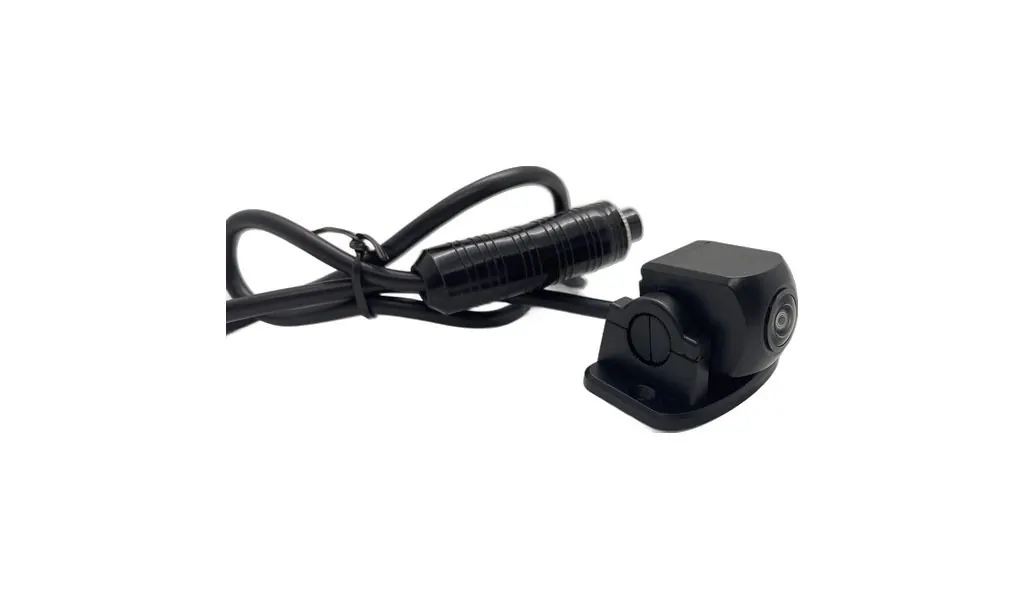
Key takeaways
- Field of view and focal length are the same decision described two ways.
- Wider is not better: past about 120° the image bends at the edges and detail drops.
- Choose the angle from the mounting position and the distance being judged, not from the number.
- Two well-placed cameras usually beat one very wide camera.
A supplier says 150°. A competitor says 140°. A third quotes 2.8 mm. These are three different ways of describing the same property, and none of them tells you whether you will be able to read a number plate at the distance you care about. Two numbers are needed before the question can be answered: the lens focal length and the active width of the sensor behind it.
The one formula worth memorising
For a lens focused at a distance much greater than its focal length, the horizontal field of view is:
Sensor width is not a datasheet headline, but it is easy to derive: multiply the horizontal pixel count by the pixel pitch. A 1080P sensor with 1920 pixels at 2.9 µm pitch has an active width of 1920 × 0.0029 mm = 5.57 mm. For most 1/2.8" and 1/2.9" 1080P sensors in vehicle cameras that lands between 5.3 mm and 5.6 mm, which is close enough to use 5.6 mm as a working figure.
The formula holds for lenses that are close to rectilinear, and the longer lenses in our ranges obey it: the JPC-100F forklift camera uses a 6 mm lens and is specified at 50°, which is what the arithmetic returns; the 10 mm thermal lens on a 256 × 192 sensor at 12 µm pitch (3.07 mm wide) calculates to 17.4° against a published 18° × 13°. Agreement within a degree or two is the normal outcome there.
Why the wide lenses cover more than the formula predicts
Below roughly 3.6 mm the arithmetic stops describing the real thing, and this is where most specification arguments happen. Our wide cameras are deliberately built with barrel distortion: straight lines bow outwards, and the lens keeps covering scene that a rectilinear lens of the same focal length would have cut off. The published angle is the real angular coverage of that lens and sensor — not a rectilinear projection.
| Lens | Angle as we publish it | Same lens as a pinhole calculation | Typical duty |
|---|---|---|---|
| 1.5 mm | 210° horizontal (360° fisheye group) | ≈124° | Panoramic 360 controllers, LRS range |
| 1.8 mm | 165° | ≈114° | Ultra-wide rear view, all-glass lens, no fisheye look |
| 2.2 mm | 170° diagonal / 135° horizontal / 100° vertical | ≈104° | Widest single side or rear camera, JPC-176 |
| 2.8 mm | 110° horizontal | ≈88° | Standard side view and blind-spot camera |
| 6 mm | 50° horizontal | 50° | Forklift and close-range work |
| 10 mm (thermal) | 18° × 13° | 17.4° × 13° | Thermal detection at distance |
Read the third column as a cross-check, not as the truth to be corrected to. A 2.8 mm lens genuinely covers 110° on a 1/2.9" sensor; the 88° figure is what a rectilinear projection of the same focal length would give, and our lenses are not rectilinear. Both numbers are real, and they describe different things.
The practical consequence: quoted angles cannot be compared across suppliers unless you know which one is being quoted. Our own specs write it as D / H / V where the difference matters — JPC-176 is 170° diagonal, 135° horizontal and 100° vertical, and those are three different numbers on the same lens. When comparing cameras, ask whether the figure is diagonal, horizontal or vertical, ask for focal length and sensor size, and where the number has to hold up — in a tender document — ask for a sample image at the mounting position. Distortion also moves detail around: the outer part of a distorted frame carries less pixel density per degree than the centre, so two cameras quoted at the same angle can still show different amounts of usable detail.
Sizing a lens for number plate reading
Automatic plate recognition needs a minimum number of pixels across each character. Practice varies, but a planning figure of at least 20 pixels per character cell is a reasonable starting point, with 30 giving comfortable margin. Take a European plate at 520 mm wide with eight character cells across it: 20 pixels per cell means the plate must span at least 160 pixels in the image.
| Lens | Horizontal FOV | Maximum distance for a 520 mm plate at 1920 pixels wide |
|---|---|---|
| 2.8 mm | 110° | ≈ 2 m |
| 6.0 mm | 50° | ≈ 7 m |
| 8.0 mm | 39° | ≈ 9 m |
| 12 mm | 26° | ≈ 13 m |
| 16 mm | 20° | ≈ 18 m |
The arithmetic behind the first row: 160 pixels across a 0.52 m plate is roughly 308 pixels per metre, so a 1920-pixel-wide frame has to span 6.2 m at the plate’s distance. A 110° frame spans 2 × tan(55°) ≈ 2.86 m of width per metre of distance, so 6.2 m of frame width is reached at about 2.2 m. On a wide lens the plate also has to fall where the distortion has not thinned the pixels out, which is another reason to look at a sample image rather than only at the angle.
A 110° camera can therefore identify a plate only at roughly the distance from a loading bay to the back of the vehicle — which is precisely why a vendor quoting a 150° or 180° camera for “plate recognition” should be asked what distance they mean. For plate work the answer is a narrower lens: 12 mm or 16 mm, with the coverage that implies.
Where the blind strip comes from
Fitting a wider lens is often proposed as the way to see more, but the near blind area on a side or rear camera is a mounting geometry problem, not a lens problem. The lowest ray a camera can see leaves the lens at its tilt angle plus half its vertical field of view, and hits the ground at:
| Mounting height | Lens (vertical FOV) | Downward tilt | Nearest visible point |
|---|---|---|---|
| 2.5 m | 6 mm (29°) | 30° | 2.5 m ahead of the camera |
| 2.5 m | 6 mm (29°) | 45° | 1.5 m ahead of the camera |
| 2.5 m | 2.8 mm (78°) | 30° | 1.0 m ahead of the camera |
| 4.0 m | 2.8 mm (78°) | 30° | 1.5 m ahead of the camera |
A camera 2.5 m up with a 6 mm lens tilted 30° downwards has an area it physically cannot see from directly beneath itself out to about 2.5 m along the ground. Anything in that strip — a bollard base, a wheel, a person’s legs — is invisible however good the sensor is.
Widening the lens to 2.8 mm reduces the strip to about 1 m, and tilting further down reduces it again at the cost of coverage at distance. This is the calculation installers actually need, and it is rarely presented alongside the angle figure it depends on.
The other lens specification: aperture
Focal length decides what the camera can see. The f-number decides how much light reaches the sensor to see it with, and it follows the same inverted logic that confuses people elsewhere in photography: a smaller number is a larger opening. Each step of √2 halves the light — F1.4 admits twice as much as F2.0, and four times as much as F2.8.
In a camera expected to keep a short exposure at night, aperture and shutter are directly linked. An extra stop of aperture is an extra stop of shutter speed before the image becomes unusable, which translates into less motion smear on a moving vehicle.
- Ask for it. Many vehicle camera datasheets omit the aperture entirely, and a supplier who can answer has usually thought about low-light performance rather than only quoting resolution.
- Expect a trade-off. A wide aperture with a wide angle is optically harder to build well, and cheaper in a plastic barrel than a metal one. Where night detail matters, the aperture figure is worth as much attention as the lens angle.
- Remember the depth of field cost. A very wide aperture reduces depth of field, which matters for a camera that must show both the vehicle’s flank and objects some distance away.
Turning the arithmetic into a specification
- Start from the subject. A number plate at 10 m, a pedestrian’s whole body at 15 m, a wheel and kerb 1 m from the vehicle: each of these is a distance-and-detail requirement, and each resolves to a pixel density.
- Convert the pixel density into a field of view, using the resolution you intend to buy. 1920 pixels across the frame is the working assumption for 1080P.
- Convert the field of view into a focal length, using the sensor width. If a supplier cannot give you the sensor size, use 5.6 mm for a 1080P 1/2.9" device and check the result against any angle they quote.
- Check the mounting geometry separately, using the height, the tilt and the vertical field of view, so that you know what the camera cannot see as well as what it can.
- Then verify on a sample. Arithmetic narrows the options; a recording at the operating distance, in the operating light, at the operating time of day, settles it.
Most specification mistakes in this category are not made in the choice of camera. They are made by choosing a camera for one duty — wide coverage for manoeuvring — and then expecting it to perform a different one, such as reading a plate at 15 m. Naming the duty and the distance first is what makes the rest of the calculation possible.
If you would rather work from the vehicle than from the arithmetic, the truck camera buyer’s guide starts from mounting position instead. Our own wide-angle reference point is the JPC-104 side camera at 150°.
Frequently asked questions
Is a wider lens always better?
No. A wider field of view puts fewer pixels on any given object, so detail at distance falls away quickly. A 2.8 mm lens will show you more of the vehicle’s surroundings and less of anything beyond a few metres. Match the lens to the duty: wide for close manoeuvring coverage, narrower for detail at distance.
Why does my 2.8 mm camera not show 110° of coverage?
Our wide lenses are built with barrel distortion on purpose, so the published angle is the real coverage: 2.8 mm is specified at 110° on a 1080P 1/2.9" sensor, and the bowing of straight lines that goes with it is the price of that width. Computed as a rectilinear projection the same lens would be about 90°. The two figures describe the same lens; the published one is what the camera actually sees.
Can I change the lens on a vehicle camera to get a different angle?
Sometimes, if the camera uses a standard threaded lens mount such as M12 and the housing allows access. It is not a drop-in swap: the lens must match the sensor format or the corners will vignette, it must be refocused after fitting, and the IR-CUT assembly and sealing have to be reassembled correctly. Ordering the angle you need from the factory is the reliable route.
How do I work out the horizontal coverage at a given distance?
Multiply the distance by twice the tangent of half the horizontal field of view. A 50° lens at 20 m covers about 2 × 20 × tan(25°), which is roughly 18.6 m wide. A 110° lens at the same distance covers about 2 × 20 × tan(55°), or 57 m. Where a lens is not rectilinear the outer part of the frame is also stretched, so the extra width at the edges carries less detail per degree than the centre.
Related articles
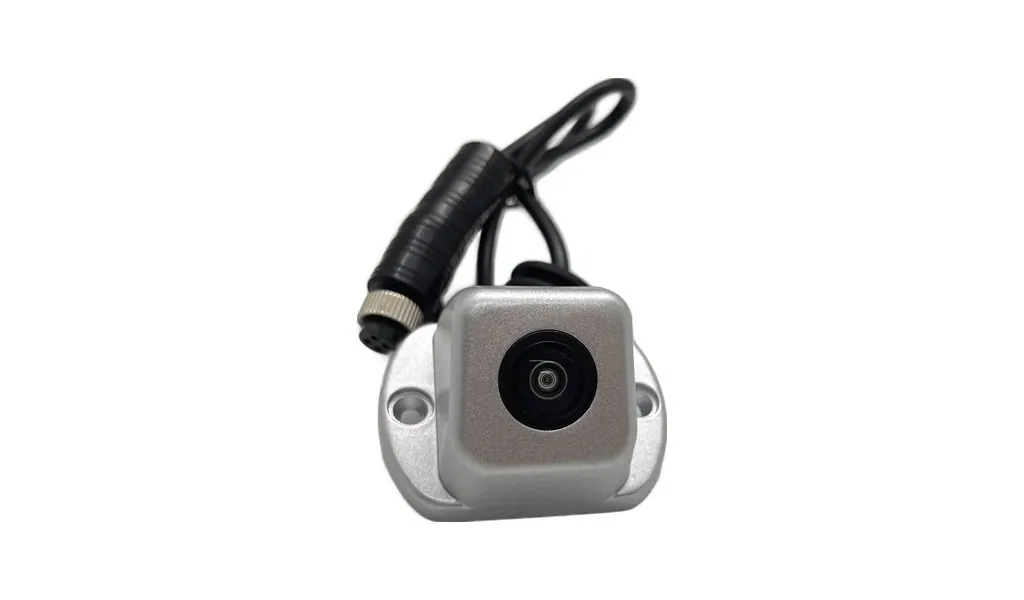
How to Choose a Truck Camera: The Complete Buyer's Guide
A practical guide to specifying commercial vehicle cameras: position, resolution, viewing angle, night vision, waterproof rating and connector type.
Camera Sensor Guide: Sony 2053, 307 and Why the Chipset Matters
How to read a vehicle camera datasheet: sensor size, chipset naming such as Sony 2053 and 307, lens construction, WDR and IR-CUT filters.
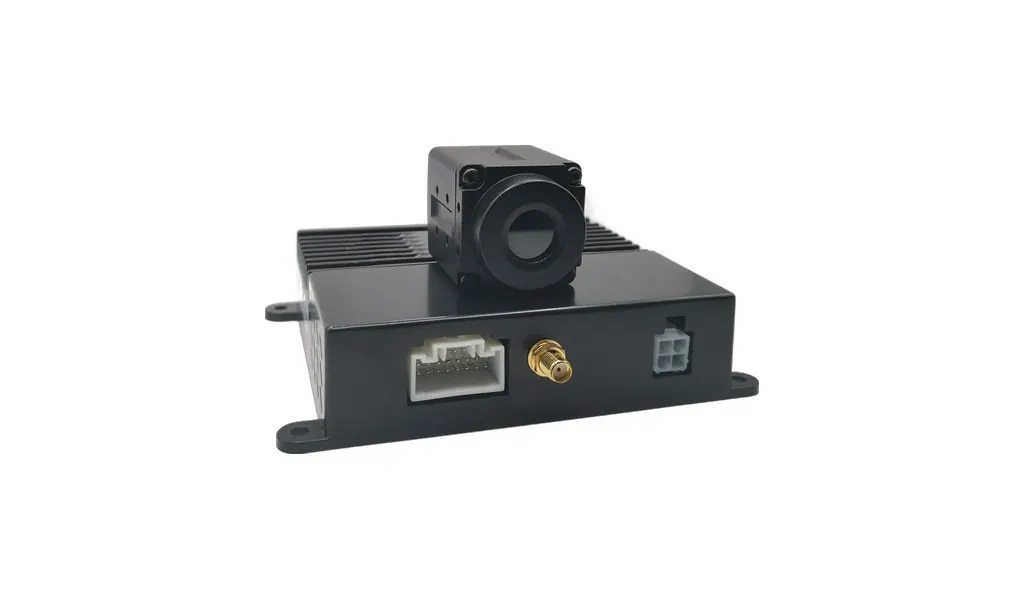
Thermal Imaging Cameras for Trucks: Detection Distances and Use Cases
How vehicle thermal cameras work, what 256×192 and 640 resolution mean on the road, how to calculate detection distance, and where thermal beats infrared.
Looking for a reliable camera system supplier?
Tell us your vehicle type and application — we will recommend the right system and quote within 24 hours. Distributors and OEM/ODM projects welcome.