
23. Wireless Forklift Cameras: Why Magnetic Mounts Fail First
A magnetic forklift camera is the fastest camera to fit and the fastest to lose. It needs no drilling, no harness and no downtime — which is exactly why it gets mounted on whatever flat surface is nearest, with a magnet chosen by feel. The failures that follow are not random. They come from three loads a pull-off rating does not describe, and each one can be measured before the kit goes on the truck.

Key takeaways
- A magnet is rated for pull-off, but a forklift loads it in peel, shear and vibration.
- A 490 g camera at 5.9G sees about 28 N; specify at least 10× the camera weight and add a tether.
- Paint and curved tube cost more holding force than a bigger magnet buys back.
- The quoted wireless range is line of sight — test in the worst aisle, not the yard.
A magnet is rated to pull off, not to stay put
Magnet datasheets quote holding force in the direction perpendicular to the surface: pull the magnet straight away from clean steel and it takes a stated number of kilograms to break contact. That is the easiest direction to hold. It is not the direction a forklift loads the magnet.
On a moving forklift the mount sees three other loads. A peel load lifts one edge of the pad and propagates across it. A shear load slides the pad along the surface. Vibration reverses the load several times a second, so a joint that holds statically can still creep.
The arithmetic is short. A 490 g camera rated for 5.9G sees a dynamic load of 0.49 × 5.9 × 9.81 ≈ 28 N — roughly 2.9 kgf — every time the truck crosses a dock plate or a floor joint. A magnet quoted at 30 kgf sounds generous until the load arrives as peel at the edge of the pad rather than as pull-off at its centre.
Three surfaces decide more than the magnet does
The magnet is usually blamed for a failure that started at the surface. Three properties matter, and only the first is obvious.
- Ferrous. Cast counterweights and steel overhead guards hold a magnet. Aluminium panels, plastic covers and stainless trim do not, however flat they look.
- Flat and thick. A curved tube gives the pad line contact instead of area contact. Thin sheet steel saturates and holds far less than a 3 mm plate.
- Unpainted. Paint and powder coat are an air gap in the magnetic circuit. Every tenth of a millimetre of coating costs holding force, and a thick powder coat can halve it.
The usual failure is a camera clamped to a powder-coated overhead guard, holding well enough to survive a hand pull and creeping after a week of shifts. The fix is not a bigger magnet. It is a bare steel adapter plate bolted to the guard, with the magnet sitting on clean metal.
The lever arm matters as much as the surface. The JPC-100FORK body is 319 mm long, and a pad at one end sees the camera weight multiplied by that distance. Shortening the bracket or moving the pad to the centre of gravity reduces the peel load more than upgrading the magnet does.
The cable pulls harder than the truck shakes
A hanging pigtail is a lever attached to the weakest edge of the mount. Every time the mast moves, the cable swings and tugs the camera at an angle the magnet was never rated for. In the field this shows up as a camera that drifts out of aim over a shift and then falls during a wash.
Route the cable with a strain-relief loop and clip it to the guard within 200 mm of the camera, so the pull is taken by the clip and not by the pad. Leave enough slack for the mast to reach full height without tensioning the cable.
Water adds the same kind of load from a different direction. A pressure washer on a magnetic mount can slide the camera along the guard. A kit rated IP69K, such as the FWR-701F, survives the water; only the mount decides whether it stays where it was aimed.
Wireless range in a warehouse is not the number on the box
Forklift kits are quoted with a line-of-sight figure — the FWR-701F is specified at 120 m unobstructed. That number is real, and it is measured with nothing between the camera and the monitor. A warehouse is the opposite of that condition.
Racking, stacked pallets, steel containers and the truck itself all attenuate 2.4 GHz. Expect the usable distance indoors to be a fraction of the quoted figure, and test it where it matters: park the forklift in the furthest corner of the building with a full rack between camera and monitor, then watch for dropped frames.
Interference is the second half of the same problem. A busy site may have dozens of access points on the same band, and the camera link competes with them. If the picture stutters only in one aisle, that aisle is the test, not the yard.
Pairing decides whether a fleet can actually swap cameras between trucks. Manual pairing is fine for one vehicle and a nuisance for twenty; the FWR-701F supports manual and automatic pairing, which is what makes a pool of trucks workable. The same trade-offs for trailer kits are set out in wireless trailer camera systems.
Power is the part that decides whether the kit gets used
A forklift is not a 12 V vehicle. Traction batteries are commonly 24, 36, 48 or 80 V, so a 12 V camera either needs a converter or its own battery. Which one you choose decides the daily routine, and the daily routine decides whether the camera is still switched on in month three.
The display in the FWR-701F kit accepts 9–35 V, which covers 12 V and 24 V vehicles directly. The camera itself runs on 12 V at under 300 mA. On a 48 V or 80 V truck, specify the converter with the kit rather than improvising one at the battery terminals.
Where wiring is impossible — a rental truck, a shared pool, a truck that changes hands weekly — the Battery-1 pack runs the camera for about 15 hours from 9600 mAh, IP68, with its own magnetic mount. Fifteen hours covers a shift, not two, so the charging routine has to be part of the installation rather than an afterthought.
The mount specification that survives a shift
| Item | What to write down | Why it matters |
|---|---|---|
| Holding force | At least 10× the camera weight (≈29 kgf for a 490 g camera at 5.9G) | Pull-off figures do not describe peel or shear |
| Surface | Bare steel ≥3 mm, flat; adapter plate if the guard is painted or curved | Paint and curvature cut the magnetic circuit |
| Secondary retention | Lanyard or tether to the guard, independent of the magnet | A mount that lets go must not fall into the aisle |
| Camera shock rating | 5.9G or better | Floor joints and dock plates load the camera every shift |
| Cable | Clipped within 200 mm, strain-relief loop, slack for full mast height | A swinging pigtail unseats the mount |
| Ingress | IP69K for wash-down sites | A wash jet both enters the housing and pushes the mount |
| Wireless | Test at the worst indoor position, not the quoted line-of-sight figure | Racking attenuates 2.4 GHz |
| Power | 9–35 V display; 12 V camera; converter for 48/80 V; or a 15 h battery pack | The wrong feed is why kits get abandoned |
If the site washes trucks daily, the ingress figure has to be read properly: IP69K is a jet test, and a loose connector is where water actually enters. The IP rating tests are worth checking before a fleet order, not after the first winter.
Before the forklift goes back to work
- Pull the mount by hand in four directions — straight off, sideways, and at both edges. If any direction moves it, the surface or the pad is wrong.
- Mark the camera position with tape on the guard, so a drift of 10 mm is visible at the next shift check rather than at the next incident.
- Fit the tether and confirm it takes the camera weight with the magnet released.
- Clip the cable within 200 mm and raise the mast to full height to confirm there is no tension.
- Test the link in the worst corner of the building, with a full rack between camera and monitor, and count dropped frames for two minutes.
- Swap the camera to a second truck and confirm pairing works without a menu dive, if the fleet shares kits.
- Run a full shift on the chosen power source and record the state of charge at the end, so the charging routine is based on a measurement.
- Wash the truck and re-check aim and ingress afterwards, not just before.
Frequently asked questions
Why does my magnetic forklift camera slide instead of falling off?
Sliding is shear creep, and it usually starts with paint or a curved surface rather than a weak magnet. A powder-coated overhead guard puts an air gap in the magnetic circuit, and a curved tube gives the pad line contact instead of full area. Fit a bare steel adapter plate, then check that the pad is centred under the camera weight.
Is a 120 m wireless range enough in a warehouse?
Not as a number to plan from. The 120 m figure is line of sight with nothing in between; racking, stacked pallets and steel containers all attenuate 2.4 GHz. Test with the forklift in the furthest corner and a full rack between camera and monitor, and count dropped frames before you commit the fleet.
Can I power a 12 V forklift camera from a 48 V traction battery?
Only through a converter rated for the vehicle’s full voltage range and its transients. Connecting a 12 V camera to a 48 V or 80 V battery destroys it. Where wiring is impractical, a 12 V pack of about 9600 mAh runs the camera for roughly 15 hours, which covers one shift and needs a charging routine.
What holding force does a forklift camera magnet need?
Plan for at least ten times the camera weight. A 490 g camera at 5.9G sees about 28 N, and a 10× margin gives roughly 280 N of holding force — before allowing for paint, curvature or a long bracket. Add a tether regardless, so a failed magnet cannot drop the camera into a working aisle.
Related articles
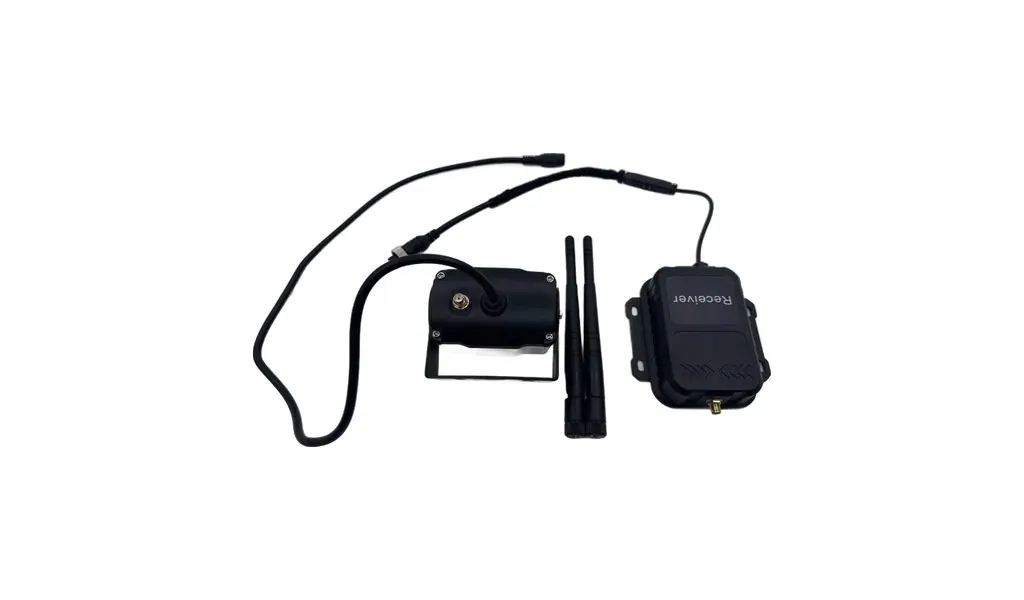
18 Wireless Trailer Camera Systems: Range, Reliability and Regulations
How wireless trailer camera systems work: what range figures mean, pairing for drop-and-hook fleets, power options for unwired trailers, and radio approval.
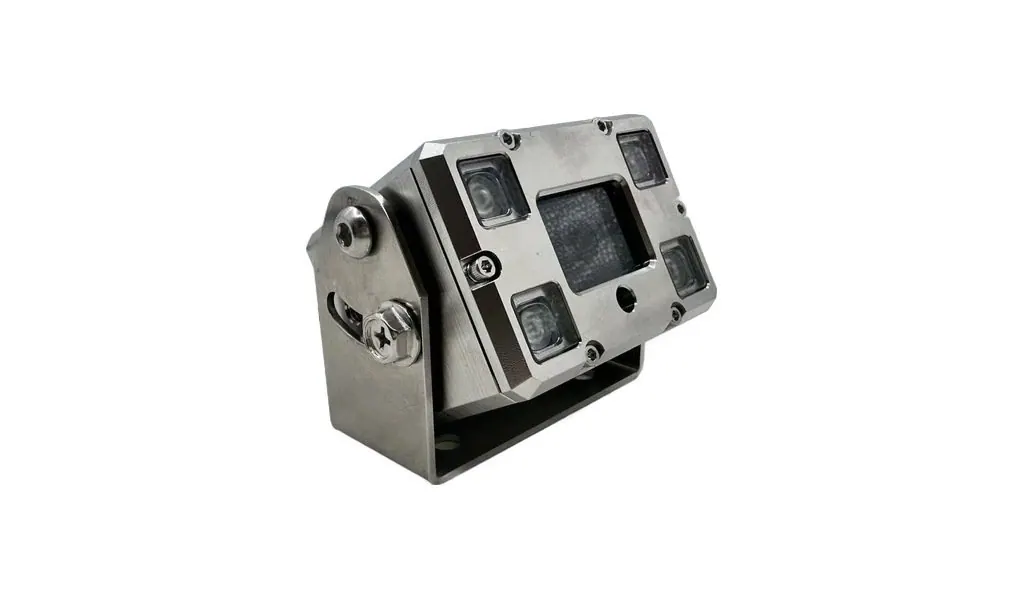
05 IP69K vs IP68 vs IP67: What Vehicle Camera Ratings Really Mean
What IP ratings actually test, why IP68 and IP69K are not comparable, why IP69K matters for pressure-washed fleets, and what the rating does not cover.
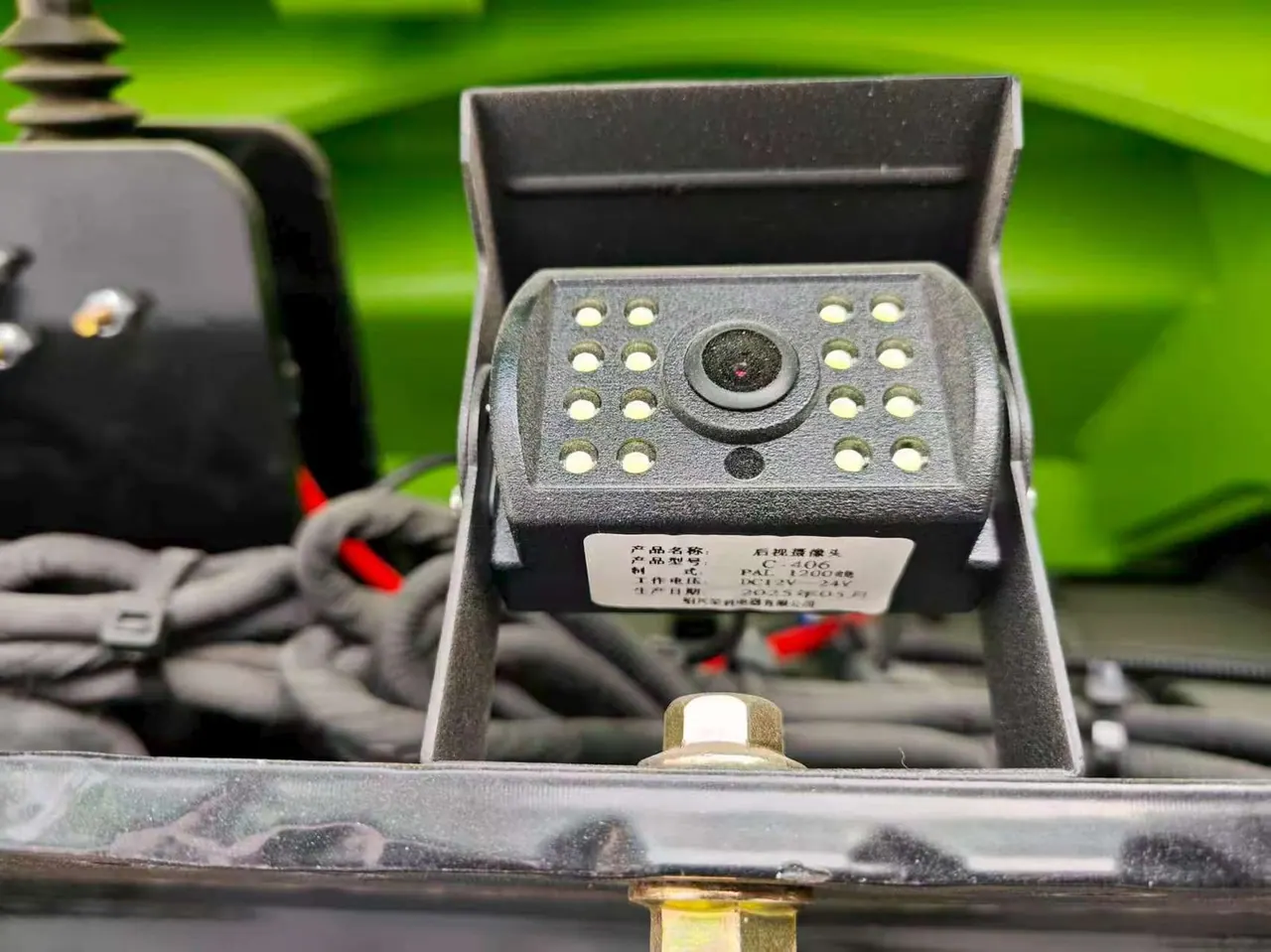
01 How to Choose a Truck Camera: The Complete Buyer's Guide
A practical guide to specifying commercial vehicle cameras: position, resolution, viewing angle, night vision, waterproof rating and connector type.
Looking for a reliable camera system supplier?
Tell us your vehicle type and application — we will recommend the right system and quote within 24 hours. Distributors and OEM/ODM projects welcome.