
What Is Inside a Vehicle Camera? Components, Quality and Price Differences
Two vehicle cameras can both say "1080P AHD", use a four-pin connector and look like a black metal box, yet solve different problems and carry very different engineering costs. Price is not set by the pixel count alone. It is the sum of the optical path, processing, mechanical protection, harness and the validation behind the finished unit.

Key takeaways
- “1080P AHD” describes the output, not the sensor size, lens quality, housing, connector or validation behind it.
- The sensor and ISP are separate devices; a common 1080P AHD pair is GC2053 plus FH8536H, but that does not make every assembly equal.
- Housing, sealing, cable, connector and bracket decide many field failures, so they belong in the price comparison.
- Compare cameras by the installation duty and the full bill of parts, not by resolution and appearance alone.
A useful way to compare quotations is to stop treating the camera as one item and read it as a chain. Each link changes the picture, the service life or both. Two cameras are comparable only when the same links have been specified in the same way.
A vehicle camera is a chain, not a packed box

| Layer | What it contains | What changes with cost |
|---|---|---|
| Optical | Front window, lens elements, focus lock and infrared illumination | Sharpness, field of view, low-light performance and thermal focus stability |
| Imaging | Image sensor and IR-CUT or fixed filter | Native resolution, colour handling and sensitivity |
| Processing and output | ISP, encoder, timing and interface driver | Noise control, AHD or IP output, latency and compatibility |
| Mechanical | Housing, seal, bracket and fasteners | Ingress protection, vibration survival, corrosion and installation position |
| Harness | Conductors, shield, strain relief and connector | Voltage drop, interference, water entry and service life |
| Validation | Tuning, test records, certification and batch control | Consistency from sample to shipment |
The chain also explains why a single line on a quotation is not enough. A good sensor behind a poor lens still gives a soft image. A strong housing connected through an unsealed plug still takes water, and a camera with capable hardware can still fail because its exposure or output timing is badly tuned.
The optical path starts before the sensor
At the front is the window that protects the lens, followed by the lens assembly itself. The lens sets the field of view, controls how much light reaches the sensor and must stay focused through the temperature changes of a vehicle. A plastic barrel and a metal barrel can use similar glass and still behave differently after a hot afternoon and a cold night.
- Lens construction. Element shape, coating, aperture and focus locking all affect image quality. Focal length alone does not describe lens quality.
- Infrared illumination. IR LEDs make an otherwise dark scene visible, but their arrangement must match the lens and housing. More LEDs do not automatically mean better reach.
- IR-CUT or fixed filter. A colour camera usually needs an IR-CUT filter that moves at night. A fixed-filter design is simpler and can be appropriate for a specific product, but it cannot provide the same automatic day and night colour behaviour.
- Front window. Coatings, sealing and resistance to stone impact matter outdoors. A scratched or contaminated window degrades every component behind it.
Field of view is part of this same decision: a wider lens sees more nearby, a narrower lens keeps more detail at distance. The trade-off is covered in lens angle and field of view, and the lighting half continues in night vision explained.
The sensor and ISP do different jobs

The image sensor turns light into electrical signals. The ISP then handles exposure, noise reduction, colour, sharpening and timing before an encoder produces the video format sent to the monitor or recorder. These are separate devices. A common 1080P AHD pairing is the GC2053 image sensor with the FH8536H ISP and encoder, but the number "2053" should not be used as a shorthand for every part on the board.
| Question to ask | Why the answer matters |
|---|---|
| Is 1080P native or interpolated? | Upscaled video uses more pixels without creating more real detail |
| What is the sensor optical format? | At equal resolution, a larger sensor usually gives each pixel more light |
| Which ISP and output format are used? | The same sensor can be tuned and encoded for different interfaces and latency |
| Is the frame rate fixed or reduced at night? | A camera can trade temporal detail for a brighter exposure after dark |
| How are power and transients protected? | A vehicle supply is not a clean laboratory DC source |
The parts that fail in service are usually mechanical
Buyers spend time comparing pixels and far less time comparing the parts that are handled, washed, vibrated and pulled. In service, a camera often fails at the bracket, seal, cable entry or connector before the image sensor reaches the end of its life.
- Housing and finish. Plastic, painted aluminium and stainless steel suit different environments. Metal is not automatically better unless the gasket path, cable entry, heat path and surface treatment are designed as one assembly.
- Ingress protection. The IP rating describes a test configuration. The connector, disturbed seal and damaged window can still defeat a housing that passed on its own.
- Bracket and fasteners. A stable angle, load spreading and service access decide whether the camera stays aimed and can be replaced without dismantling trim.
- Cable and shield. Conductor size, shielding, strain relief and routing affect voltage drop and electrical interference. A ferrite or shielded construction may be needed near noisy vehicle systems.
- Connector. A locking, sealed aviation connector costs more than a simple pigtail because the housing, contacts, boot and assembly all have to work together.
This is where an IP69K side camera, a compact cab camera and a low-cost aftermarket camera can diverge sharply even when all three offer 1080P video. The difference is not cosmetic: IP69K and IP68 test different conditions, and the camera interface range shows how much of the installation depends on the lead and plug.
Same "1080P AHD" does not mean the same camera
A label can describe the common output while leaving most of the cost drivers open. This is the comparison table we use before deciding that two quotations are actually for the same class of product.
| Specification | Low-cost end of the range | Higher-cost engineering |
|---|---|---|
| Optics | Simple lens, limited focus stability | Matched lens, tighter tolerance and locked focus |
| Sensor and processing | Older or smaller sensor, basic tuning | Larger or newer sensor, tuned ISP and stable timing |
| Resolution claim | Interpolated or conditional | Native at the stated frame rate |
| Housing | Compact plastic or light metal shell | Sealed metal or stainless assembly for the duty |
| Harness | Short lead or basic pigtail | Shielded, strain-relieved lead with a sealed connector |
| Special function | Rear or side view only | Dual lens, heater, AI, warning output or wireless link |
| Evidence | Sample photograph and a specification line | Test record, approved drawing and batch inspection |
That does not make the lower-cost camera wrong. A protected cab camera that never sees a pressure washer may not need a 304 stainless housing. The mistake is paying for "1080P" as though it proves the environmental, optical and electrical parts are equivalent.
Where the price difference really comes from

- Sensor and lens selection. A larger sensor, better low-light response or a matched metal-barrel lens increases component cost and tuning effort.
- Image processing and output. Native resolution, frame timing, AHD or IP encoding and stable firmware are engineering work, not just a connector choice.
- Environmental protection. Sealing, corrosion-resistant materials, pressure-wash validation and thermal design add material and test cost together.
- Harness and connector quality. Locking contacts, sealing boots, shielding and strain relief are small parts with a large effect on returns.
- Added functions. A heater, dual optical path, microphone, AI detection, warning output or wireless link adds hardware and a new validation scope.
- Testing and certification. EMC, environmental testing, market certification and batch inspection have to be completed and maintained, especially for OEM supply.
- Tooling, volume and packaging. A private housing, custom bracket, printed box or branded firmware spreads its setup cost over the ordered quantity.
Four cameras, four different engineering briefs
| Use case | The parts that should be prioritised | What should not be assumed |
|---|---|---|
| Rear view on a light van | Correct angle, stable bracket and a clean monitor interface | That every advertised wide angle is equally sharp at the edges |
| Truck side view in a wash-down yard | Sealed metal housing, protected harness and serviceable mounting | That IP68 and IP69K are two points on one scale |
| Cabin and road in one housing | Two optical paths, controlled reflections, stable focus and clean cable exit | That combining two lenses automatically halves installation cost |
| AI blind-spot or driver-monitoring camera | Application-specific optics, processing, warning logic and field validation | That adding an algorithm makes the base camera suitable for the duty |
The third and fourth rows are where package comparisons become especially misleading. A dual-lens unit may replace two mounting positions, but it also brings two optical paths, a more complex housing and tighter assembly. An AI camera carries the same mechanical and optical work plus compute, software and alarm validation. Those are different products even when the box looks similar.
How to compare camera quotations properly
- Name the mounting position and duty. Side view, rear view, cabin, wash-down or driver monitoring are different briefs.
- State the monitor or recorder and the signal format. AHD, CVBS and IP are not interchangeable at the ends of the cable.
- Ask whether resolution is native. Confirm the frame rate and the light level at which it holds.
- Ask for sensor optical format and lens details. A resolution figure without the optical path is incomplete.
- Confirm the IR-CUT arrangement and IR range. A fixed filter is acceptable only when the product and use case match.
- Confirm the housing, ingress test and operating temperature. Ask for the test configuration, not just a number.
- Specify connector, pinout, cable length and shield. Send a photo of the existing plug and mating socket when replacing a unit.
- List what is included. Bracket, screws, waterproof boot, lead, monitor, recorder and packaging can change the bundle comparison.
- Ask what evidence ships with the batch. Drawing, tuning record, inspection result and certification depend on the project and market.
For a fleet, add the cost of installation and downtime to the purchase price. For an OEM project, add tooling, approval and change control. Those costs are easy to miss when two rows in a spreadsheet end at the unit price.
If you want a direct comparison, send the existing camera photo, connector pinout, mounting position, monitor or recorder model and the failure or visibility problem. We can then identify which parts can stay standard and which need to change. The truck camera range and custom camera programme are useful starting points for that discussion.
Frequently asked questions
Why can two 1080P vehicle cameras cost different amounts?
The resolution label covers only the output size. Price also depends on whether the resolution is native, the sensor and lens, ISP tuning, housing and sealing, connector and cable, added functions, testing and order quantity. Two cameras can share a resolution and differ substantially in almost everything else.
Does a metal housing always mean a better vehicle camera?
No. Metal can improve impact resistance and heat spreading, and it supports some sealed and anti-vandal designs. But it is only one part of the assembly. The gasket path, window bond, cable entry, surface treatment, bracket and connector still have to be designed and tested together.
Is 2053 the camera chipset?
The commonly quoted 2053 is the GC2053 image sensor, not the complete chipset. The FH8536H is the ISP and encoder that processes the sensor signal and produces the output. The two perform different jobs and should be read separately on a specification.
Should I choose a 4-pin aviation connector or RCA?
A 4-pin aviation connector is normally the better fleet choice because it locks, seals and supports a combined power and video lead. RCA and DC pigtails can be adequate for a short aftermarket run, but they are usually less robust at the vehicle interface. Always match the pinout, not just the shell.
What information is needed for an accurate camera quotation?
Send the mounting position, vehicle voltage, monitor or recorder model, connector and pinout, required cable length, day and night viewing requirement, wash or climate conditions, quantity and market. A photo of the existing installation is useful because it shows the space and bracket far better than a generic vehicle description.
Related articles

04. Camera Sensor Guide: 2053, 8536H, 307 — What the Chipset Numbers Mean
How to read a vehicle camera datasheet: sensor size, what chipset numbers such as 2053, 8536H and 307 actually mean, lens construction, WDR and IR-CUT filters.
Read guide 6 min read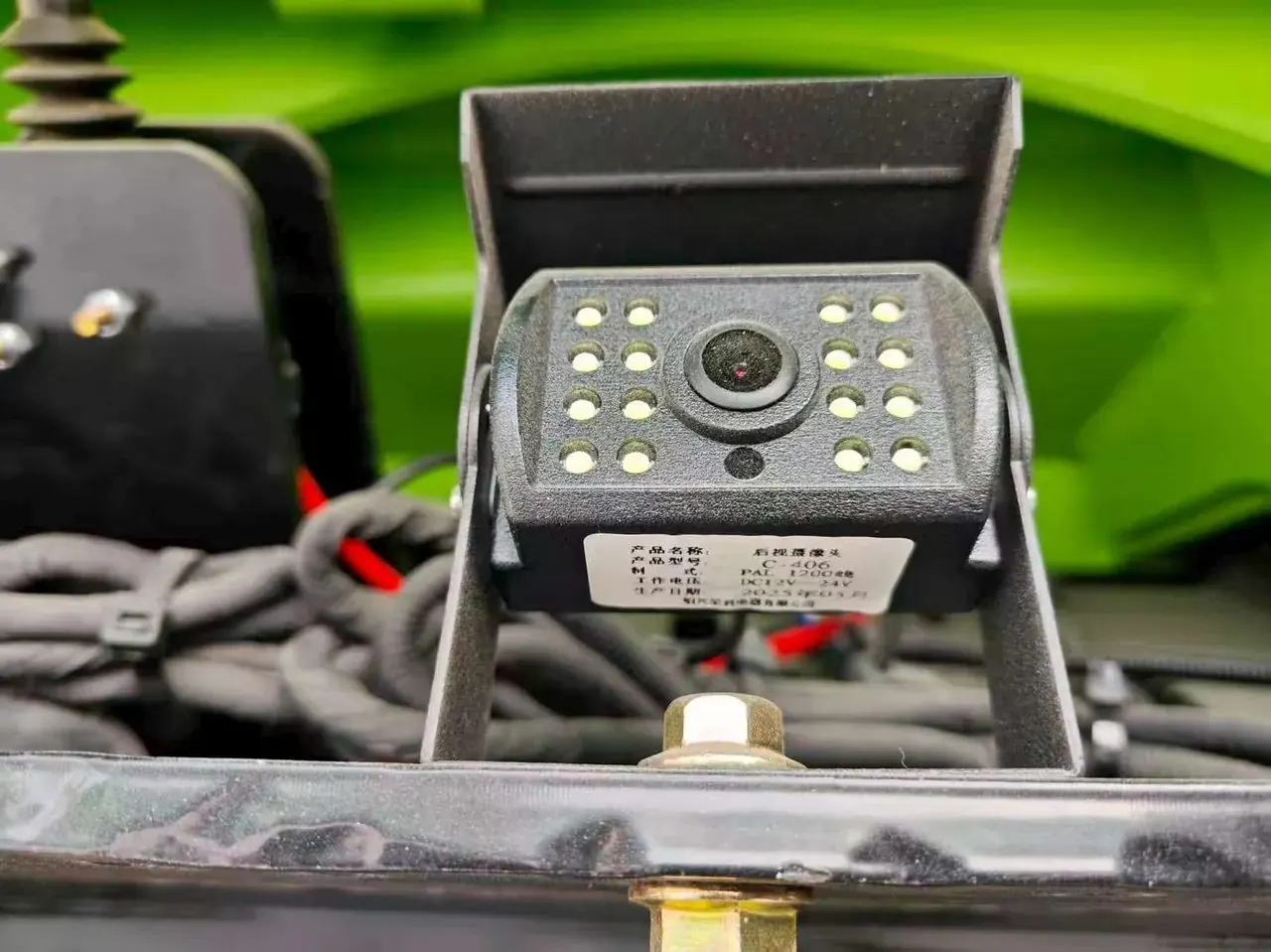
01. How to Choose a Truck Camera: The Complete Buyer's Guide
A practical guide to specifying commercial vehicle cameras: position, resolution, viewing angle, night vision, waterproof rating and connector type.
Read guide 6 min read
05. IP69K vs IP68 vs IP67: What Vehicle Camera Ratings Really Mean
What IP ratings actually test, why IP68 and IP69K are not comparable, why IP69K matters for pressure-washed fleets, and what the rating does not cover.
Read guide 5 min readLooking for a reliable camera system supplier?
Tell us your vehicle type and application — we will recommend the right system and quote within 24 hours. Distributors and OEM/ODM projects welcome.